Technical information
Professional drying follows a series of linked principles: remove excess liquid water, stabilise the indoor environment, promote evaporation from wet materials, capture the moisture released into the air, and monitor the process through to completion. The balance between these stages changes as the building dries.
Materials do not all behave in the same way. Highly permeable materials can absorb water rapidly and may also release it relatively readily once suitable drying conditions are established. Low-permeance finishes or layered constructions can trap moisture and slow evaporation. A successful drying programme therefore considers the material itself as well as the room air.
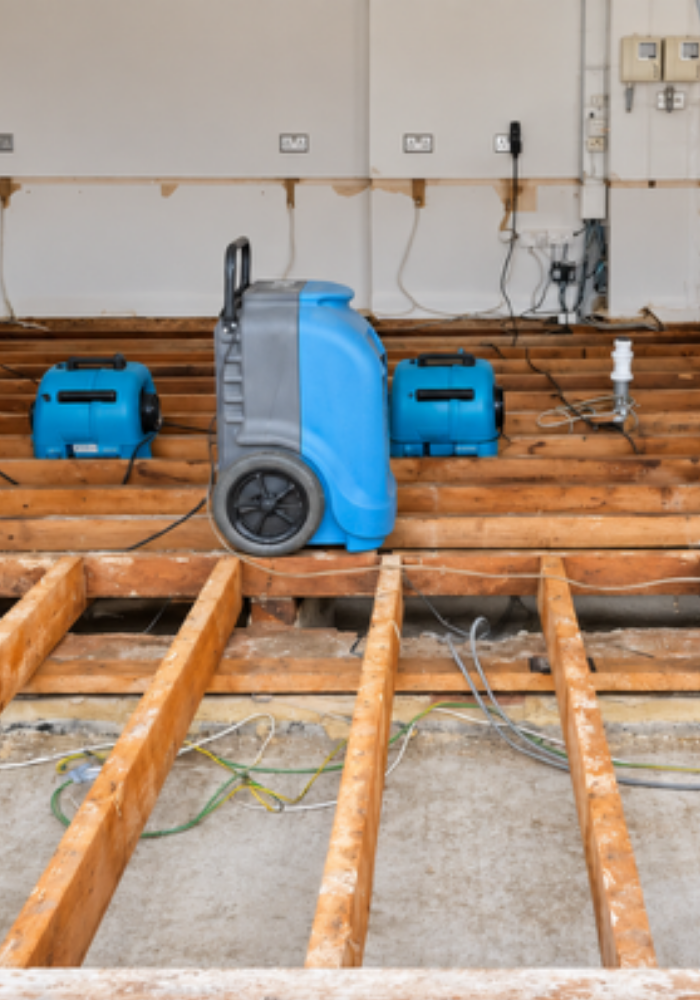
Refrigerant/LGR dehumidifiers remove moisture efficiently in many warm, humid environments. Desiccant dehumidifiers can achieve lower humidity levels and remain effective in cooler conditions. Air movers increase the movement of air across wet surfaces to promote evaporation, while carefully controlled heat can increase the energy available for drying. None of these should be used in isolation without considering the building, moisture load and environmental conditions.
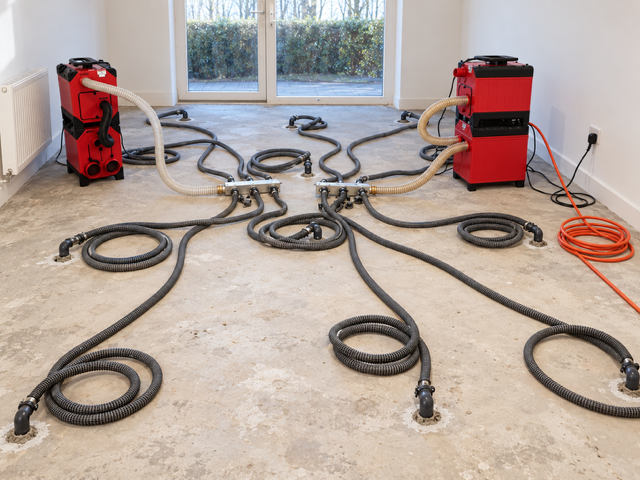
Some structures need targeted drying. Moisture trapped beneath floating floors, in insulation layers, cavities or other low-access areas may require suction or pressure drying so dry air is moved through the affected construction. The method is selected after understanding the build-up and any contamination considerations.
For longer projects, cloud-based environmental sensors can provide continuous trend data for temperature, relative humidity, dew point and humidity ratio. Where suitable, external probes can also monitor in-situ conditions within cavities or concrete. Remote data helps the technical team decide whether a site visit or adjustment is required, but material verification remains essential before declaring the structure dry.