24 HOUR EMERGENCY RESPONSE: Call 0800 5999 009 or email info@humidityresponse.uk

Specialist biohazard cleaning for contaminated properties and high-risk environments

Biohazard contamination can arise in many situations that do not fit neatly into a trauma or sewage category. Blood and body fluids, discarded needles, animal waste, contaminated void properties and other biological residues may create exposure and sharps risks that require a controlled response rather than conventional cleaning.

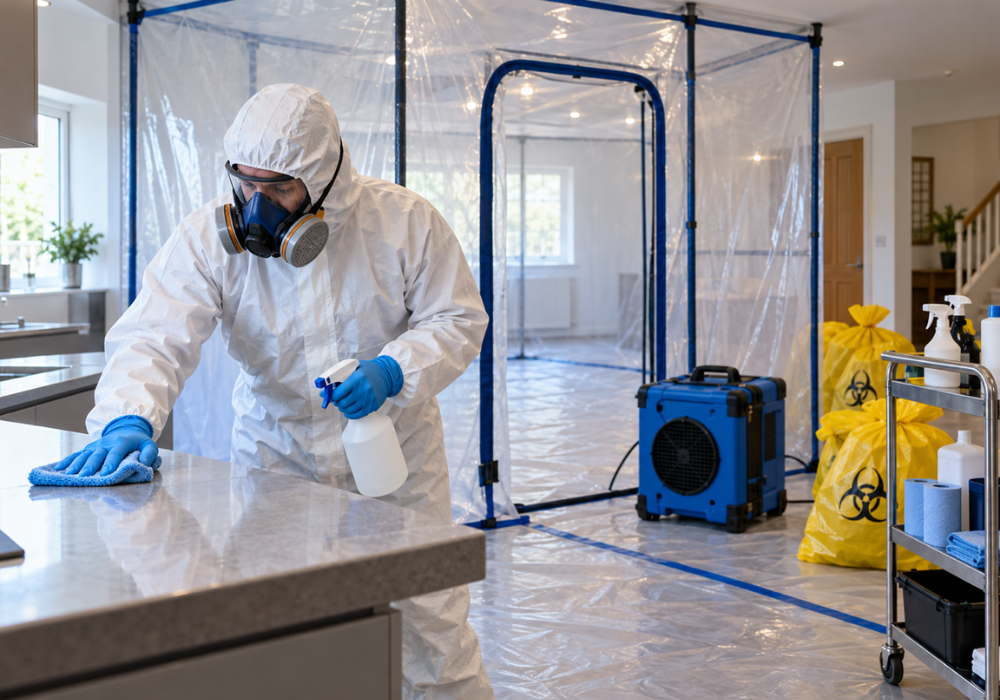
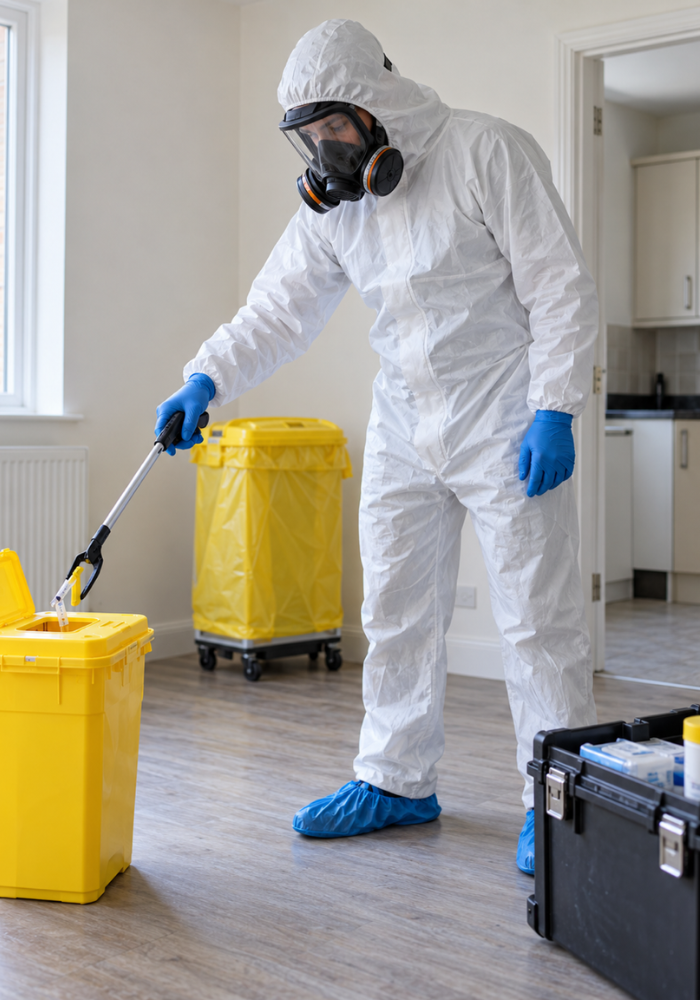
Humidity Response provides specialist biohazard cleaning for domestic, commercial, managed and insurance-related properties. The scope is tailored to the source of contamination, the material affected and the way the area is used. We identify the hazards, establish the work zone, remove gross contamination and waste, clean and disinfect suitable retained surfaces and document the work where required.

Biohazard cleaning is deliberately evidence-led. We do not assume that every dirty property is infectious, and we do not use stronger chemicals simply because the word biohazard is involved. The correct method depends on what is known or reasonably suspected, the potential exposure route, the level of contamination and the surfaces or contents involved.

Why choose Humidity Response

Circle

Broad specialist capability

We can respond to biological contamination that sits outside normal cleaning contracts or conventional flood/fire restoration.

Circle

Hazard recognition before cleaning

Sharps, bodily fluids, animal contamination, chemical residues and damaged materials are considered when the method statement is developed.

Circle

Controlled clean-to-dirty workflow

Work can be sequenced to reduce transfer of contamination through equipment, footwear, waste or handling.

Circle

Appropriate PPE/RPE and procedural controls

Protection is selected for the actual task rather than applied as a generic costume.

Circle

Material-specific decisions

We distinguish cleanable retained surfaces from absorbent or damaged materials that may need removal.

Circle

Integrated restoration support

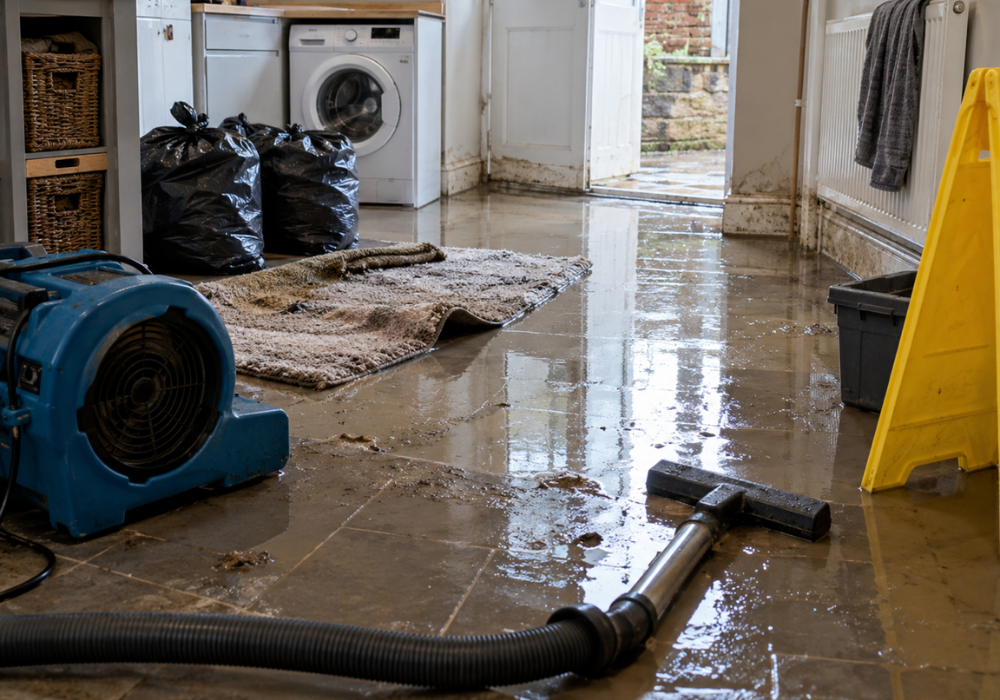
If contamination is linked to moisture, odour, mould, fire/water damage or a building defect, the wider restoration can be coordinated through Humidity Response.

Our biohazard cleaning process

1.

Define the hazard and affected area

We establish what is known about the contamination, what is only suspected, how people may be exposed and which rooms, contents or building materials require assessment.

2.

Establish controls

Access, PPE/RPE, sharps procedures, equipment movement, clean/dirty zones and waste routes are planned according to the incident. Additional specialist advice is sought where the hazard falls outside the agreed service scope.

3.

Remove gross contamination and hazardous items

Biological residues, contaminated debris and sharps are removed using methods that minimise direct contact and prevent uncontrolled transfer to clean areas.

4.

Decide what can be retained

Surfaces and contents are assessed for porosity, condition and accessibility. Items that cannot be practically decontaminated may require controlled disposal, while suitable materials are retained for cleaning.

5.

Clean and disinfect as appropriate

Physical cleaning removes soil and organic contamination. Disinfection is then applied where required using a product compatible with the surface and appropriate to the contamination, following the specified concentration and contact time.

6.

Verify the agreed scope and manage waste

The work area is inspected, waste is segregated and contained, equipment is decontaminated or managed appropriately and the client is advised of any residual damage, hidden contamination or further restoration required.

Technical information

A biohazard is defined by the potential for biological material to cause harm, not by how unpleasant an area looks. Risk assessment therefore focuses on the source, likely organisms, amount of material, route of exposure and task. Bloodborne-virus controls, for example, place particular emphasis on preventing sharps injuries and contact with blood or body fluids through broken skin or mucous membranes.

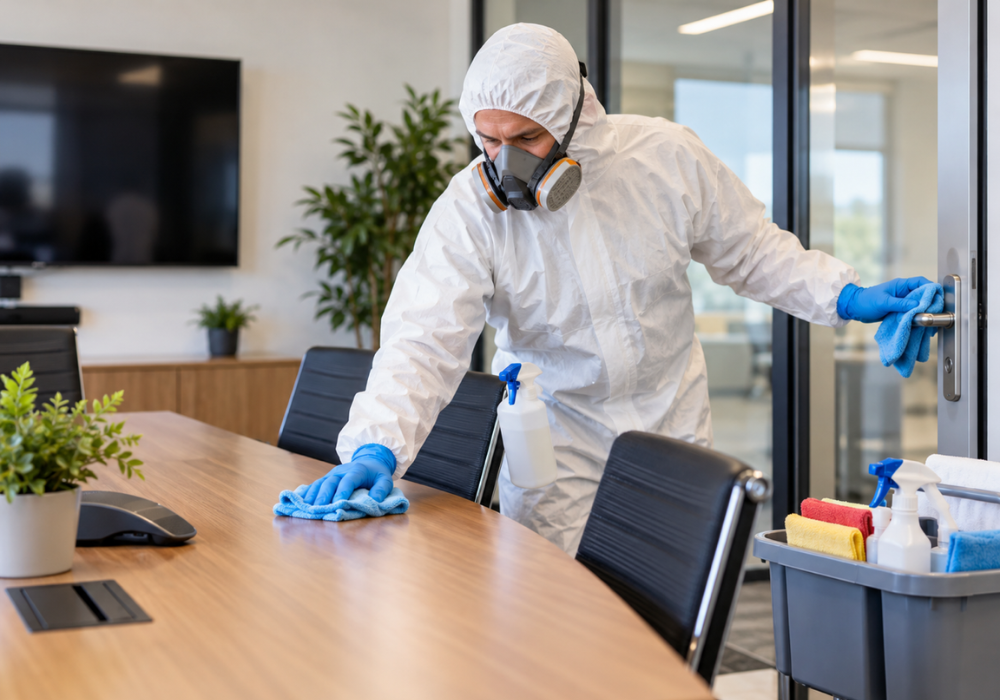
The hierarchy of control still applies. Where possible, the hazard is contained or removed at source and the work method is designed to reduce direct handling. PPE supports those controls but does not replace them. Gloves, protective clothing, eye/face protection and RPE are selected according to the actual exposure route and task.

Cleaning and disinfection should be planned as separate functions even when a combined product is used. Cleaning physically removes soil and some microorganisms; disinfection reduces microorganisms to an acceptable level for the intended environment. Product choice must consider material compatibility, organic load and the required contact time.

Waste classification is important because biohazard jobs can generate several different streams. Sharps, infectious waste, offensive waste, contaminated soft materials, chemicals and ordinary building debris may be subject to different handling rules. Humidity Response’s website should therefore promise controlled and compliant waste management rather than suggesting that everything is placed into the same hazardous-waste category.

HEPA-filtered vacuuming or air filtration may be useful where dry particulate contamination, dust generation or wider restoration work makes airborne-particle control relevant, but it is not a substitute for physical removal of blood, body fluids or other gross contamination. The method is selected according to the incident rather than added automatically to every biohazard job.

Typical applications

  • Blood and body-fluid contamination outside a trauma-scene instruction
  • Discarded needles and sharps in void, vacant or misused properties
  • Animal faeces, blood or biological contamination in buildings
  • Contaminated communal, commercial or managed spaces
  • Void-property and housing-association biohazard instructions
  • Industrial or workplace incidents involving biological contamination
  • Specialist cleaning following an incident once the area is released and safe to access

Frequently asked questions

What is the difference between trauma cleaning and biohazard cleaning?

Trauma cleaning is specifically focused on difficult incidents such as accidents, blood loss or unattended deaths. Biohazard cleaning is broader and can cover biological contamination, sharps, animal waste and other high-risk environments that are not necessarily linked to a traumatic event.

Do you treat every biohazard job as infectious?

We apply precautionary controls where the source is unknown or may present an infection risk, but the method is still based on the evidence and risk assessment. We avoid making unsupported claims about specific pathogens unless they are known or testing has established them.

Can you remove needles and sharps?

Sharps can form part of the scope where the site and waste arrangements allow it. They require controlled retrieval with suitable tools and containers and should not be mixed with general waste.

Do you use fogging or spray chemicals throughout the property?

Not as a default. Effective biohazard remediation is source-led and relies on appropriate physical cleaning. Any supplementary disinfection method must be suitable for the environment, the target contamination and the client’s requirements.

Can you clean porous materials?

Some porous items may be restorable depending on the material and contamination, but deep biological contamination can be difficult to decontaminate reliably. We assess whether retention is technically sensible or whether controlled removal is the safer option.

Will you provide evidence that the work has been completed?

Where included in the instruction, we can provide photographs, a record of the work undertaken, waste information and recommendations for any further restoration. Completion documentation reflects the agreed scope; it is not described as a universal guarantee that no microorganism remains anywhere in the property.

Accreditations, Memberships and Professional Training

01_pqs
02_cqms
ICO_Logo_Blue
OnceForAll_-_Full_colour_RGB-scaled
05_safecontractor
06_ssip_smas_existing_website
07_builders_profile
08_citb
09_bdma_existing_website
10_iicrc_existing_website
11_pmii
Screenshot 2026-10-12 at 20.21.30
13. Dewpoint Tech Logo OCT26
14_trading_standards_checked
15_nasc_existing_website
15_nasc_scalable_alternative
16_cscs
17_bwca_small_icon