24 HOUR EMERGENCY RESPONSE: Call 0800 5999 009 or email info@humidityresponse.uk

Discreet, respectful trauma cleaning after difficult incidents

When an accident, traumatic event or unattended death occurs, the practical clean-up can be extremely difficult for families, employees, landlords and property managers to manage themselves. Blood, body fluids, sharps and biological residues require controlled handling, while the circumstances demand discretion and respect for the people affected.

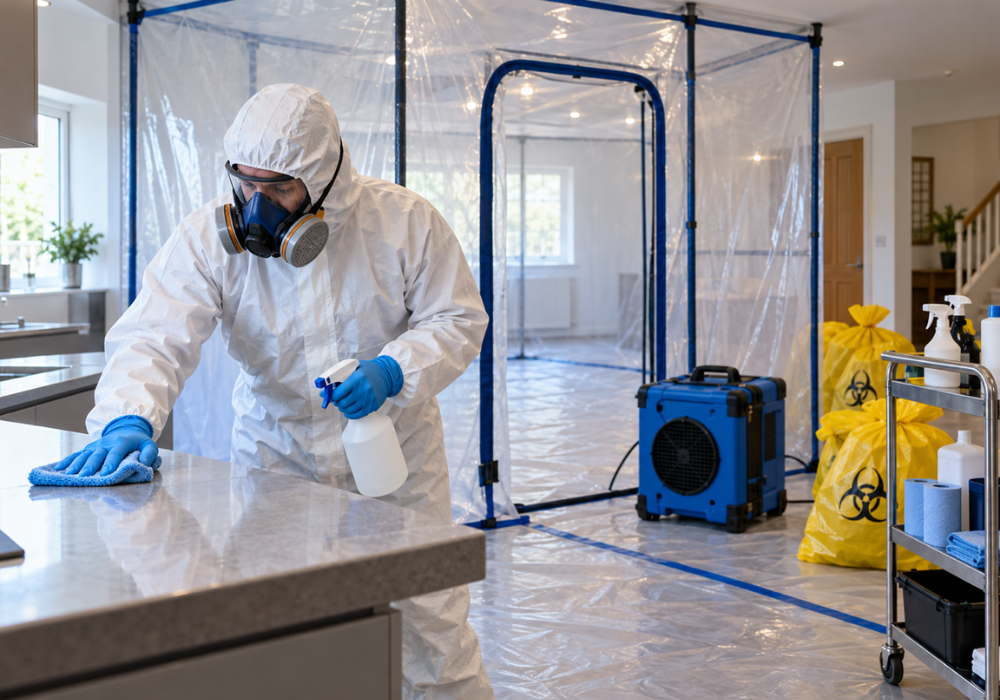
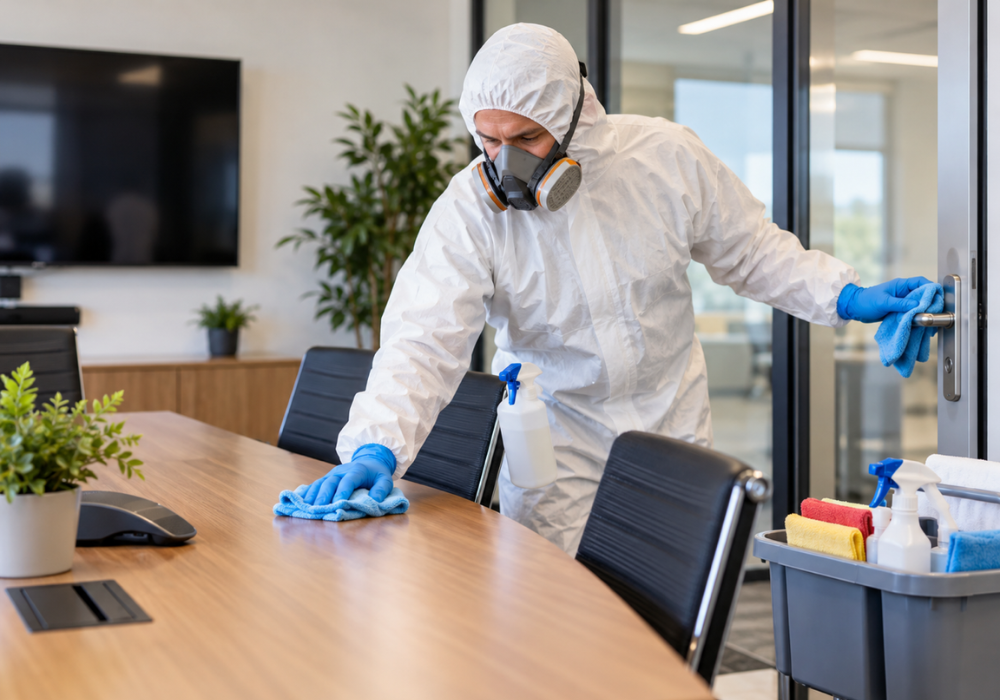
Humidity Response provides specialist trauma cleaning once the relevant authorities have released the scene and the work can proceed safely. Our technicians assess the contamination, identify sharps and other hazards, establish suitable work controls, remove affected materials where necessary, clean and disinfect retained surfaces and manage odour and waste as part of the agreed scope.

We do not treat trauma cleaning as an ordinary cleaning task. The service is planned around both the biological risk and the building itself: contamination can migrate into joints, floor coverings, subfloors, furniture, wall bases and voids, while some items may be suitable for restoration and others may need controlled removal. Clear communication and confidentiality are maintained throughout.

Why choose Humidity Response

Circle

Discreet and compassionate approach

We communicate sensitively and avoid unnecessary exposure of the incident to neighbours, staff or other occupants.

Circle

Risk-assessed methodology

Blood/body fluids, sharps, broken glass, damaged structures and any other site-specific hazards are considered before work begins.

Circle

Controlled decontamination

Gross contamination is removed first, followed by cleaning and appropriate disinfection of retained materials and surfaces.

Circle

Restoration knowledge

We assess floor build-ups, furnishings, substrates and building elements to determine what can reasonably be retained and what requires removal.

Circle

Odour and hidden-source investigation

Persistent odour is treated by identifying and removing the source rather than simply masking it.

Circle

Documentation where required

Property managers, insurers and loss adjusters can be provided with photographs, scope information and completion notes appropriate to the instruction.

Our trauma cleaning process

1.

Confirm access and scene release

Trauma cleaning begins only when the relevant authority, property representative or responsible person confirms that the area is available for restoration work. We establish the boundaries of the instruction and any privacy requirements.

2.

Risk assess and secure the work area

The team checks for sharps, broken glass, contaminated objects, damaged materials and other hazards. The work area and movement routes are controlled to reduce the risk of cross-contamination.

3.

Remove gross biological contamination

Visible blood, body fluid residues and affected debris are removed using controlled methods designed to minimise handling and splashing. Sharps are dealt with separately using appropriate tools and containers.

4.

Assess and remove affected porous materials where necessary

Carpet, underlay, soft furnishings, plasterboard, timber products or other absorbent materials may require partial or full removal if contamination has penetrated beyond a cleanable surface.

5.

Clean and disinfect retained areas

Surfaces are physically cleaned before an appropriate disinfectant is used where required. The product and method are selected for the material, contamination and site conditions, with the manufacturer’s dilution and contact time followed.

6.

Final inspection, odour control and documentation

The cleaned area is visually inspected against the agreed scope, residual odour sources are addressed where possible, waste is removed through the correct route and completion information is recorded.

Technical information

Blood and body fluids are treated as potentially infectious for occupational risk-control purposes. Exposure is most likely through puncture injuries from contaminated sharps, contact with damaged skin or splashes to the eyes, nose or mouth. This is why trauma work requires more than gloves and a surface spray: work methods should minimise direct contact, protect mucous membranes where splashing is possible and control sharps at source.

Sharps management is a critical part of many trauma or void-property instructions. Needles, blades, broken glass and other sharp objects should not be picked up casually or placed into ordinary waste. The work area may require a systematic visual search, controlled retrieval using suitable tools and immediate placement into an appropriate sharps container.

Decontamination is a process rather than a single chemical. Physical cleaning removes blood, body fluids and organic material and can reduce the microbial load. Where disinfection is required, the chosen product must be suitable for the target organisms and material, and must be used according to the manufacturer’s instructions. Organic contamination can reduce the effectiveness of some disinfectants, which is why cleaning comes first.

Not every affected item can or should be retained. Contamination can penetrate carpet backing, underlay, unsealed timber, chipboard, plasterboard and other porous materials. The decision to restore or remove is based on depth of contamination, access, material condition, intended use and whether the area can be effectively cleaned and verified.

Odour after an unattended death or severe biological incident can be complex. Deodorisation should follow source removal and cleaning. If contaminated material remains behind finishes or within voids, masking fragrances will not provide a durable solution. Further targeted access may be needed if the source has migrated beyond the initially visible area.

Typical situations

  • Accidents involving blood or body fluids
  • Unattended deaths and decomposition-related contamination
  • Traumatic incidents in homes, workplaces or public buildings
  • Properties released after police or emergency-service attendance
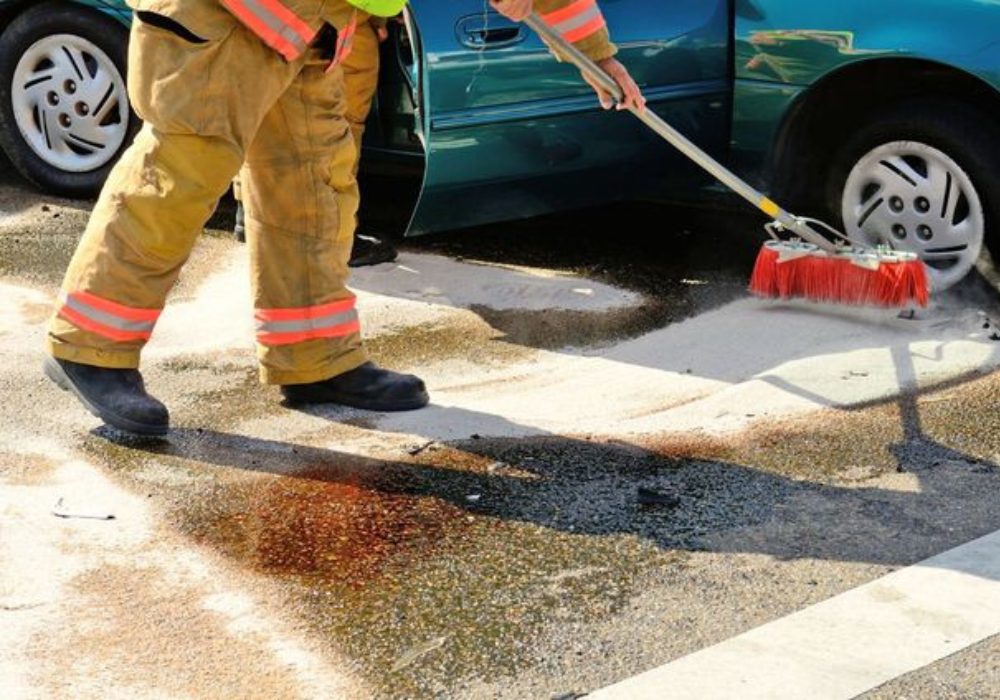
  • Vehicles or work areas affected by biological contamination
  • Landlord, housing and property-management instructions
  • Insurance-related trauma and specialist cleaning claims

Frequently asked questions

Do you attend crime scenes?

We can undertake specialist cleaning after an incident once the relevant authority has released the scene and the property representative has authorised the work. We do not interfere with an active investigation.

Why should blood and body fluids be professionally cleaned?

They can present biological and sharps risks, and contamination may extend into porous materials beyond the visible surface. A professional process addresses removal, cleaning, disinfection, waste and the affected building materials in a controlled sequence.

Do you remove contaminated carpets or furniture?

Where contamination has penetrated a material and effective decontamination is not practical, controlled removal may be recommended. Items that are physically sound and cleanable are assessed for restoration rather than automatically discarded.

Will the work be discreet?

Yes. Trauma cleaning is handled sensitively and confidentially. Site access, vehicles, communication and waste movements can be managed with discretion appropriate to the location.

Can you remove odours as well as visible contamination?

Yes, but odour treatment starts with source removal. Once contaminated material has been removed and the area cleaned, additional deodorisation can be used where residual odour remains.

Do you work out of hours?

Humidity Response provides 24/7 emergency response, subject to access, scene release and the practical requirements of the incident.

Accreditations, Memberships and Professional Training

01_pqs
02_cqms
ICO_Logo_Blue
OnceForAll_-_Full_colour_RGB-scaled
05_safecontractor
06_ssip_smas_existing_website
07_builders_profile
08_citb
09_bdma_existing_website
10_iicrc_existing_website
11_pmii
Screenshot 2026-10-12 at 20.21.30
13. Dewpoint Tech Logo OCT26
14_trading_standards_checked
15_nasc_existing_website
15_nasc_scalable_alternative
16_cscs
17_bwca_small_icon