24 HOUR EMERGENCY RESPONSE: Call 0800 5999 009 or email info@humidityresponse.uk

Schools & Education

Restoration planned around teaching, safeguarding and safe reoccupation

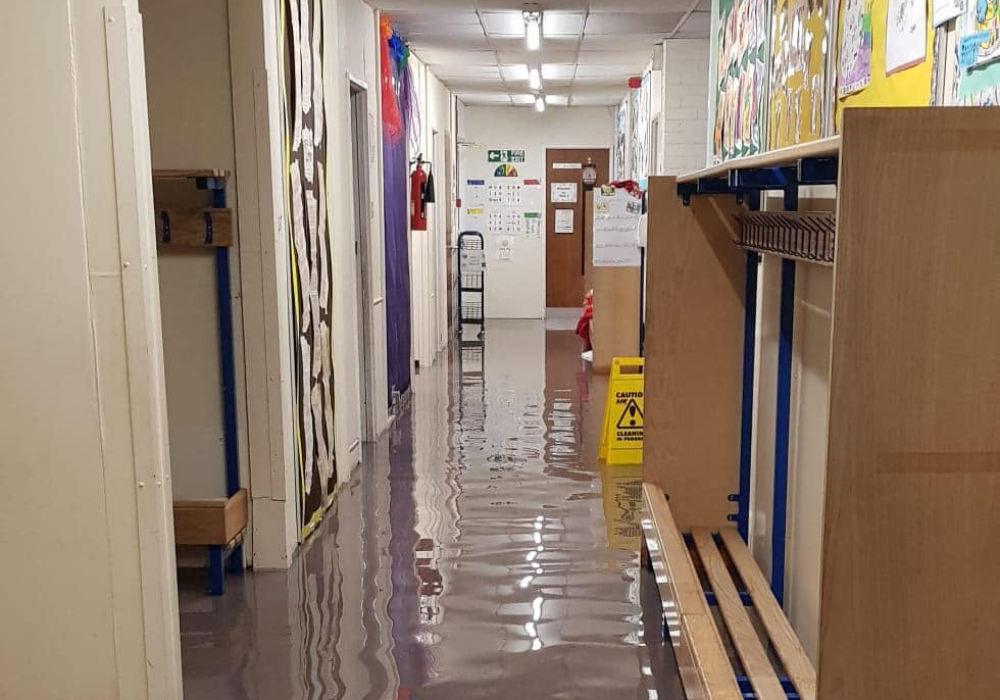
A fire, flood, leak, mould problem or sewage incident in an education setting is not simply a property-maintenance issue. Classrooms, corridors, kitchens, halls, offices and specialist teaching spaces may need to be assessed and recovered quickly enough to reduce closure and disruption, while access, safeguarding and site procedures still have to be respected.

Humidity Response supports schools, academies, colleges and education estates with specialist damage assessment, drying, mould and environmental services. We can plan work around the operational calendar where practical, including evenings, weekends and holiday periods, and provide clear technical evidence to help the school, local authority, insurer or facilities team make decisions about reoccupation and follow-on repairs.

After a major loss, the quickest route back to normal is not always to treat every area identically. Moisture mapping and phased assessment can help distinguish unaffected rooms, areas needing active drying and spaces requiring more intrusive remediation. That information can support practical recovery planning while the responsible organisation considers the wider safety and operational requirements.
How we support education settings

  • Rapid response to water, fire and contamination events where delay could extend closure or damage additional teaching areas.
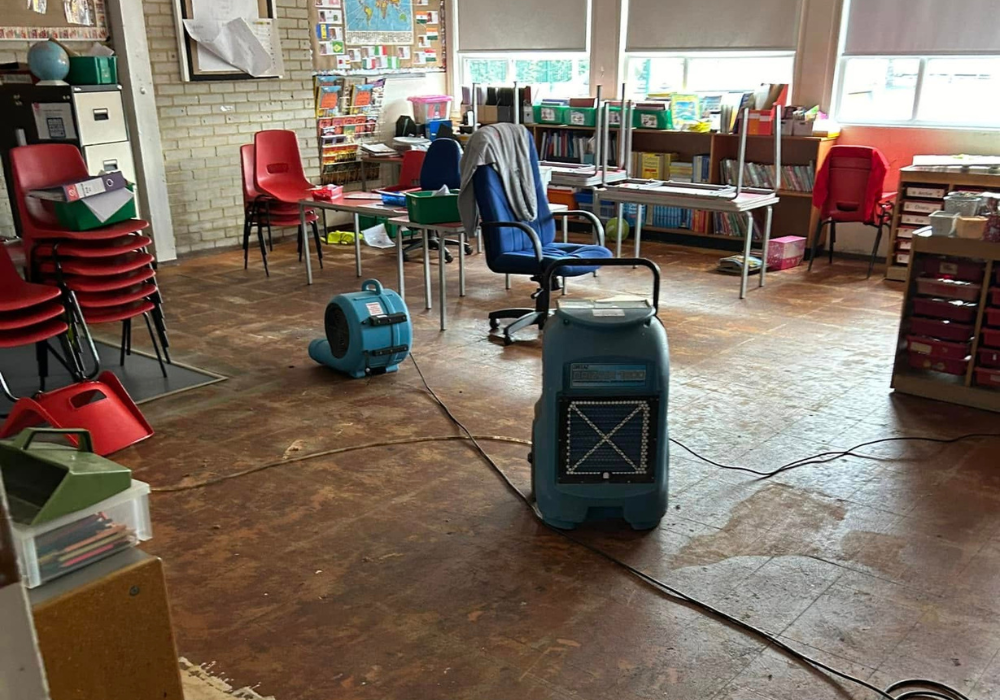
  • Large-area drying for classrooms, corridors, halls, concrete floors and other substantial spaces.
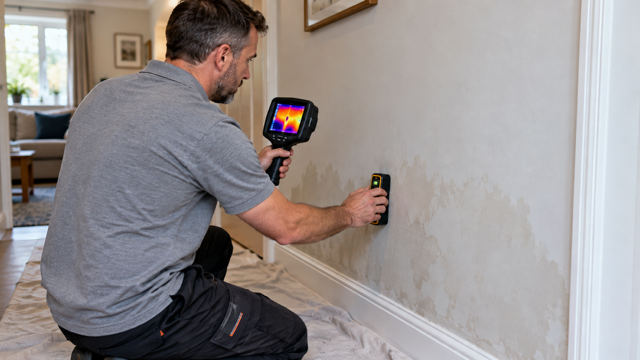
  • Moisture mapping to show which areas are affected and which remain outside the loss, helping prioritise recovery and access.
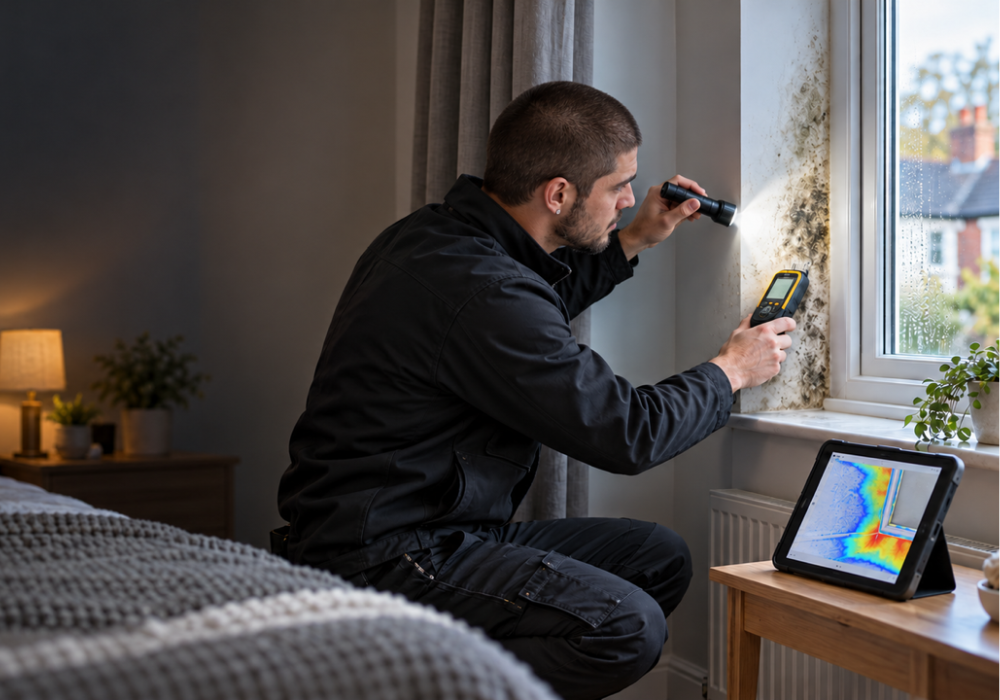
  • Mould and environmental investigation for classrooms, stores, offices and other areas where persistent damp or indoor-condition concerns have been reported.
  • Work planning around site access and safeguarding requirements supplied by the school or responsible body.
  • Clear reporting for estates teams, insurers, surveyors and project managers, including photographs, readings and recommendations.
  • Remote monitoring where suitable so drying or environmental conditions can be reviewed between site visits.

Relevant services for schools and education

  • Flood and escape-of-water recovery
  • Structural and commercial drying
  • Fire and smoke restoration
  • Mould investigation and remediation
  • Air-quality testing where justified
  • Leak detection and moisture mapping
  • Thermal imaging surveys
  • Sewage and biohazard response
  • Construction drying during refurbishment or new works
  • Odour removal and environmental monitoring

Our education-sector process

1.

Establish operational priorities

We identify affected rooms, critical teaching spaces, access restrictions, term dates and any site-specific requirements.

2.

Assess and contain the damage

Water, moisture, contamination or smoke spread is documented and immediate measures are taken within scope to protect unaffected areas.

3.

Prioritise recovery zones

Areas can be ranked according to damage, use, access and technical drying/remediation requirements.prioritised where required.

4.

Design the restoration programme

Equipment, containment, monitoring and specialist works are planned around the building and operational constraints.

5.

Monitor progress

Moisture and environmental data are reviewed, with changes to the strategy recorded where required.

6.

Provide completion information

We report the status of our specialist works and identify any remaining repair, testing or reinstatement required before the responsible person decides on use of the area.

Safe reoccupation and clear responsibilities

Humidity Response can provide technical evidence on the condition of the materials and the completion of our drying, cleaning or remediation scope. The decision to reopen or reoccupy an education area remains with the school, responsible body or other duty holder, taking account of all relevant building, health, safeguarding and operational requirements.

Frequently asked questions

Can you work during school holidays or outside teaching hours?

Yes, where practical and agreed in advance. This can be particularly useful for intrusive investigations, large drying installations, mould remediation or work in high-traffic areas.

Can you dry a large school after a flood?

Yes, subject to the extent and construction. We can design commercial drying systems using dehumidification, air movement and, where appropriate, controlled heat and remote monitoring across larger areas.

Can you show which classrooms are actually affected?

Moisture mapping can help define the affected area and support prioritisation. Readings are interpreted against the building materials, unaffected references and known loss history rather than relying on visual damage alone.

Can you investigate mould in a classroom?

Yes. We can assess moisture sources, environmental conditions and affected materials and recommend remediation or further monitoring. Air sampling may be considered when it has a clear investigative purpose.

Do you manage safeguarding requirements?

We work within the site-specific access and safeguarding arrangements provided by the school or responsible organisation. Any particular vetting, induction or supervision requirements should be agreed before attendance.

Can you provide reports for the insurer or local authority?

Yes. Findings, photographs, readings and recommendations can be documented for the relevant project stakeholders according to the instruction.

Accreditations, Memberships and Professional Training

01_pqs
02_cqms
ICO_Logo_Blue
OnceForAll_-_Full_colour_RGB-scaled
05_safecontractor
06_ssip_smas_existing_website
07_builders_profile
08_citb
09_bdma_existing_website
10_iicrc_existing_website
11_pmii
Screenshot 2026-10-12 at 20.21.30
13. Dewpoint Tech Logo OCT26
14_trading_standards_checked
15_nasc_existing_website
15_nasc_scalable_alternative
16_cscs
17_bwca_small_icon