24 HOUR EMERGENCY RESPONSE: Call 0800 5999 009 or email info@humidityresponse.uk

Condensation Assessments

Condensation assessments using building inspection, environmental data and remote monitoring

Condensation is created when moisture in the air meets surfaces that are cold enough for water vapour to condense. In real buildings, however, the reason can be complex. High moisture production, inadequate extraction, intermittent heating, cold bridging, insulation defects, blocked vents, poor air movement and the way rooms are occupied can all interact. A brief visit may not capture the conditions that occur overnight, during cooking or showering, or when a property is unoccupied.

Humidity Response carries out condensation assessments that combine building inspection with temperature, relative humidity, surface-temperature and dew-point-related analysis. Where the pattern is intermittent or disputed, we can deploy remote environmental sensors to log conditions over time and review the data without repeated site visits. This provides landlords, homeowners and property managers with objective evidence of when high humidity or condensation risk occurs and what building or environmental measures are likely to help.

Why choose Humidity Response

Circle

Evidence over blame

We assess the interaction between building fabric, heating, ventilation, moisture generation and occupancy rather than assuming condensation is caused by one behaviour or one defect.

Circle

Short-term and long-term data

Spot measurements can be supplemented with remote monitoring so daily, overnight and weekly humidity patterns can be identified.

Circle

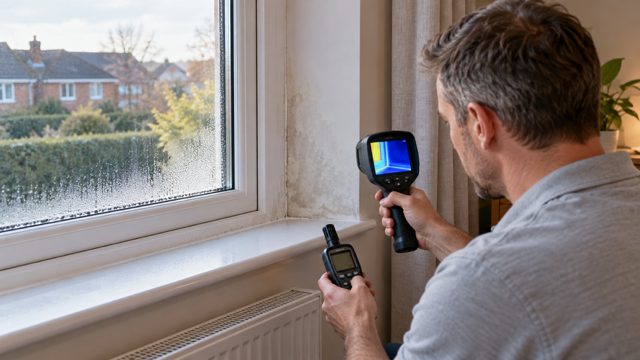
Thermal assessment of cold surfaces

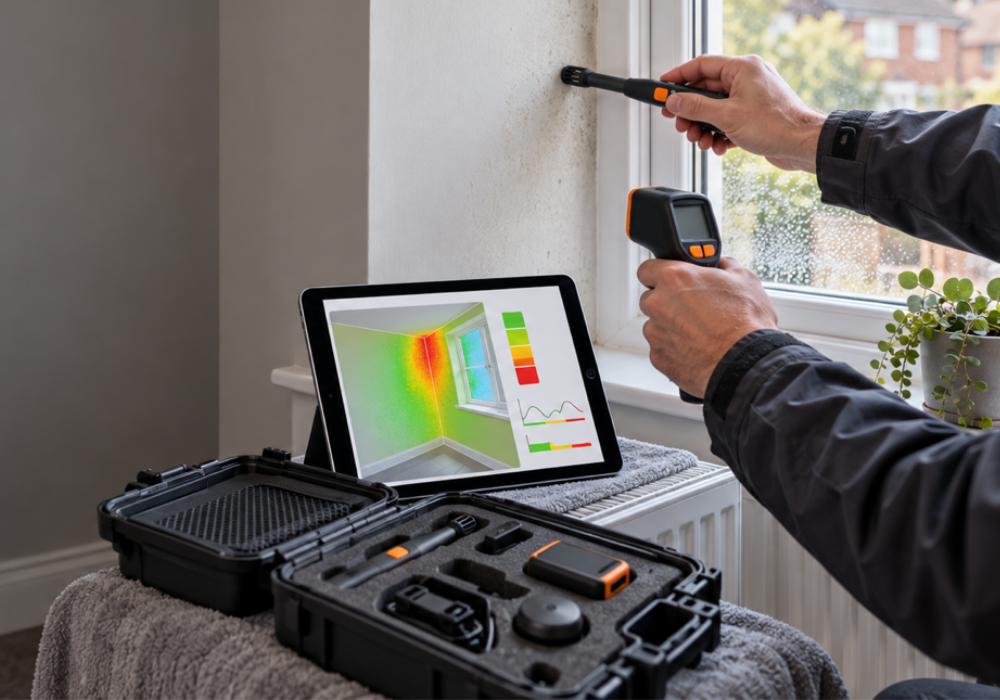
Thermal imaging and surface-temperature checks help locate cold bridges, insulation gaps and areas where surface temperatures may approach the dew point.

Circle

Ventilation and heating review

Extract fans, air paths, room usage, heating patterns and obvious building deficiencies are considered alongside the environmental data.

Circle

Remote cloud monitoring

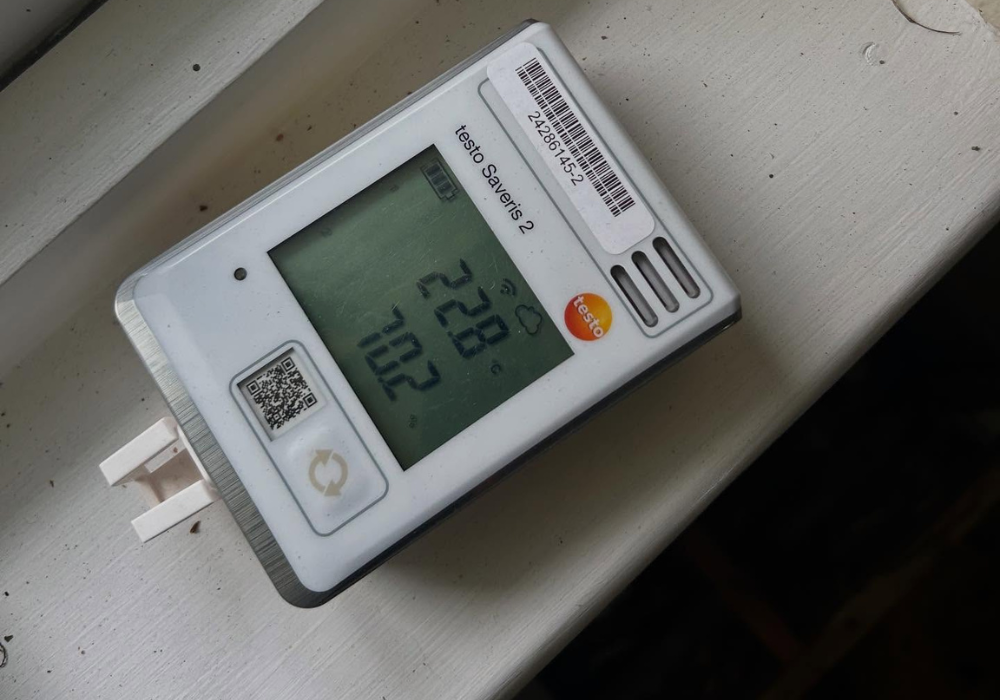
Tramex environmental sensors can transmit temperature, relative humidity and dew-point-related data to a secure online platform for review and reporting during the monitoring period.

Circle

Practical recommendations

The final advice can distinguish between repairs, ventilation improvements, heating or insulation measures, monitoring, and reasonable changes to moisture management where those are genuinely supported by the evidence.

Our condensation assessment process

1.

Review the pattern

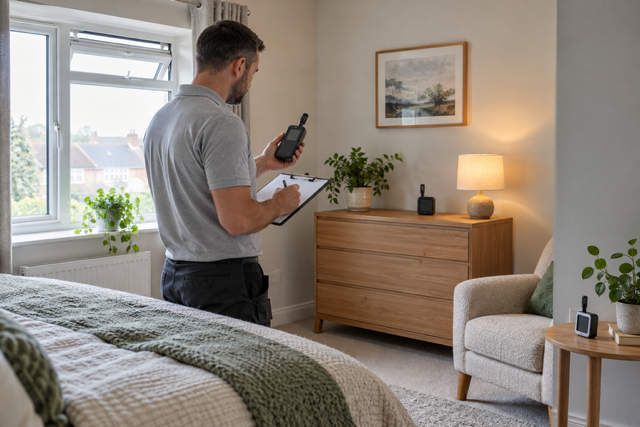
We establish which rooms are affected, when condensation or mould appears, whether it is seasonal, the heating and ventilation arrangements, occupancy pattern and any previous building or leak issues.

2.

Inspect the building and ventilation

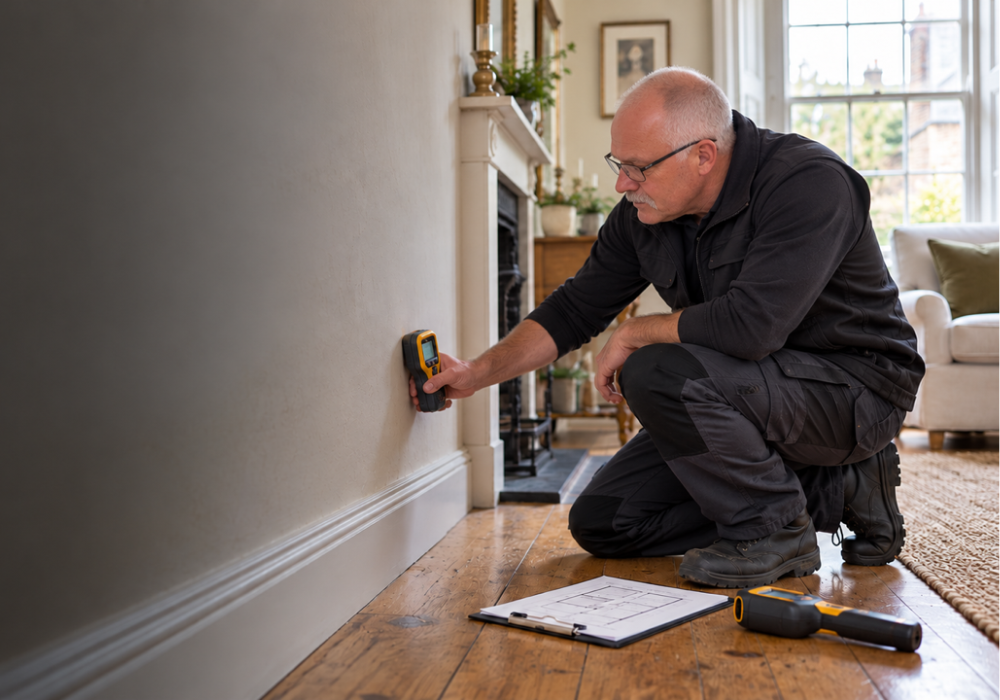
External walls, windows, corners, furniture locations, extract systems, trickle vents, insulation indicators, cold junctions and obvious defects are reviewed where accessible.

3.

Take environmental and surface readings

Ambient temperature and relative humidity are measured and compared with relevant surface temperatures. Dew-point relationships are considered to identify where condensation is likely under the observed conditions.

4.

Use thermal imaging to target cold areas

Thermal patterns can highlight cold bridges, insulation irregularities and areas requiring closer temperature or moisture checks. Moisture readings are taken where the pattern suggests damp may also be present.

5.

Deploy remote monitoring where required

For intermittent or disputed conditions, sensors can be positioned in selected rooms to record temperature and relative humidity over an agreed period, allowing trends, peaks and recovery periods to be reviewed remotely.

6.

Analyse and report

The data is interpreted alongside the building inspection. We identify the likely drivers of condensation and set out proportionate recommendations for ventilation, heating, insulation, repairs, moisture management or further investigation.

Technical information

Relative humidity changes with temperature. Warm air can hold more water vapour than cold air, so the same amount of moisture can produce a higher relative humidity as a room cools. The dew point is the temperature at which the air becomes saturated under those conditions; surfaces at or below that temperature can collect condensation.

This is why surface temperature matters as much as the room-air reading. Corners, window reveals, external-wall junctions and areas behind large furniture can be significantly colder than the centre of the room. Thermal bridges or missing insulation can therefore create localised mould risk even when the average room conditions appear reasonable.

Ventilation needs to remove moisture at the places and times it is generated. Bathrooms, kitchens and drying laundry can create short humidity peaks, while poor extraction or blocked vents can allow that moisture to remain in the building. Heating and insulation also matter because raising and stabilising surface temperatures can reduce the amount of time surfaces spend close to the dew point, provided ventilation remains adequate.

Remote environmental monitoring is particularly useful where a single inspection would be misleading. Tramex cloud sensors can log temperature and relative humidity and calculate related environmental values such as dew point, allowing conditions to be viewed remotely as trends rather than isolated readings. The data still needs to be interpreted with the building inspection; a graph alone does not identify the physical cause.

Typical applications

  • Recurring window and external-wall condensation
  • Bedroom mould that appears during colder months
  • Landlord and tenant condensation disputes
  • Housing portfolios requiring objective environmental evidence
  • Properties with intermittent high humidity or inadequate extraction
  • Vacant properties or buildings requiring remote environmental oversight
  • Post-remediation monitoring to check whether conditions have stabilised

Frequently asked question

What is the difference between damp and condensation?

Condensation is one mechanism that can create dampness: airborne moisture condenses on colder surfaces. Damp can also result from leaks, penetrating water, ground moisture or residual water damage, so the assessment must determine which mechanism is actually present.

Can you prove whether a tenant is causing condensation?

Our role is to assess the evidence, not assign blame. We look at building fabric, ventilation, heating, temperature/RH patterns and moisture generation together. The result may show building deficiencies, environmental factors, occupancy-related moisture loads or a combination of these.

How long do the monitoring sensors stay in the property?

The period depends on the problem. It needs to be long enough to capture the conditions being investigated – for example normal weekday/weekend use, overnight cooling or a recurring weather pattern. The duration is agreed when the monitoring plan is set up.

Can you view the data without coming back to site?

Yes. Where cloud-connected monitoring is deployed, the environmental data can be reviewed remotely during the project. A return visit may still be recommended if the data identifies a building condition that requires physical inspection.

Will installing a dehumidifier solve condensation?

A dehumidifier can reduce airborne moisture, but it does not necessarily correct the underlying cause. Ventilation, heating, insulation, cold bridges, leaks and moisture generation should be assessed so any recommendation is proportionate and sustainable.

Can condensation cause mould even if the wall does not look wet?

Yes. Repeated periods of elevated surface humidity can support mould growth without obvious running water. This is one reason temperature, humidity and cold-surface conditions are assessed together rather than looking only for visible wetness.

Accreditations, Memberships and Professional Training

01_pqs
02_cqms
ICO_Logo_Blue
OnceForAll_-_Full_colour_RGB-scaled
05_safecontractor
06_ssip_smas_existing_website
07_builders_profile
08_citb
09_bdma_existing_website
10_iicrc_existing_website
11_pmii
Screenshot 2026-10-12 at 20.21.30
13. Dewpoint Tech Logo OCT26
14_trading_standards_checked
15_nasc_existing_website
15_nasc_scalable_alternative
16_cscs
17_bwca_small_icon