24 HOUR EMERGENCY RESPONSE: Call 0800 5999 009 or email info@humidityresponse.uk

Insurance

Restoration support that helps keep claims moving

When a property claim occurs, insurers need reliable information quickly enough to make informed decisions while also protecting the policyholder experience and controlling unnecessary escalation. Humidity Response provides specialist damage-management and environmental restoration support across water, fire, mould, contamination and building-diagnostic losses, with an emphasis on clear evidence, practical mitigation and transparent communication.

We understand that the restoration contractor is only one part of a wider claims journey. Our role is to establish what has happened, reduce further damage where possible, document the condition of the property, recommend a proportionate restoration strategy and provide meaningful progress information as the claim develops. Where an instruction is limited to survey, drying, remediation or specialist investigation, we remain focused on that scope rather than creating unnecessary work.

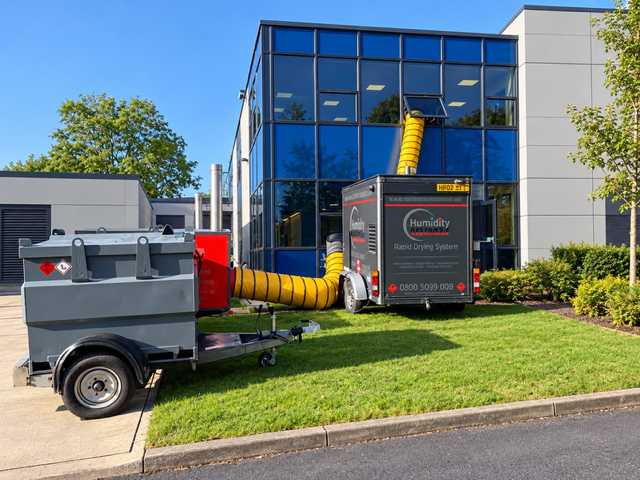
How Humidity Response supports insurers

Circle

Fast initial information

Site observations, photographs, moisture data and immediate recommendations help the insurer or appointed representative understand the loss at an early stage.

Circle

Evidence-led mitigation

Drying, contamination control, salvage and strip-out recommendations are based on the materials and conditions found rather than a blanket approach.

Circle

Clear restoration rationale

We explain why work is recommended, what is being monitored and what would indicate that the strategy needs to change.

Circle

Policyholder-focused communication

We explain the restoration process in plain language and aim to reduce uncertainty around equipment, access, monitoring and next steps.

Circle

Cost-conscious decisions

Our objective is to limit secondary damage and retain restorable materials where technically appropriate, while identifying items that cannot reasonably be saved.

Circle

Specialist capability across one loss

Fire, smoke, water, mould, leak detection, sewage, odour, oil/fuel and environmental issues can overlap; our services can be coordinated around the actual incident.

Circle

Documented progress

Reports, readings, images and updates can support claim reviews, approvals and decisions throughout the restoration phase.

Services commonly required on insurance claims

  • Emergency water and flood response
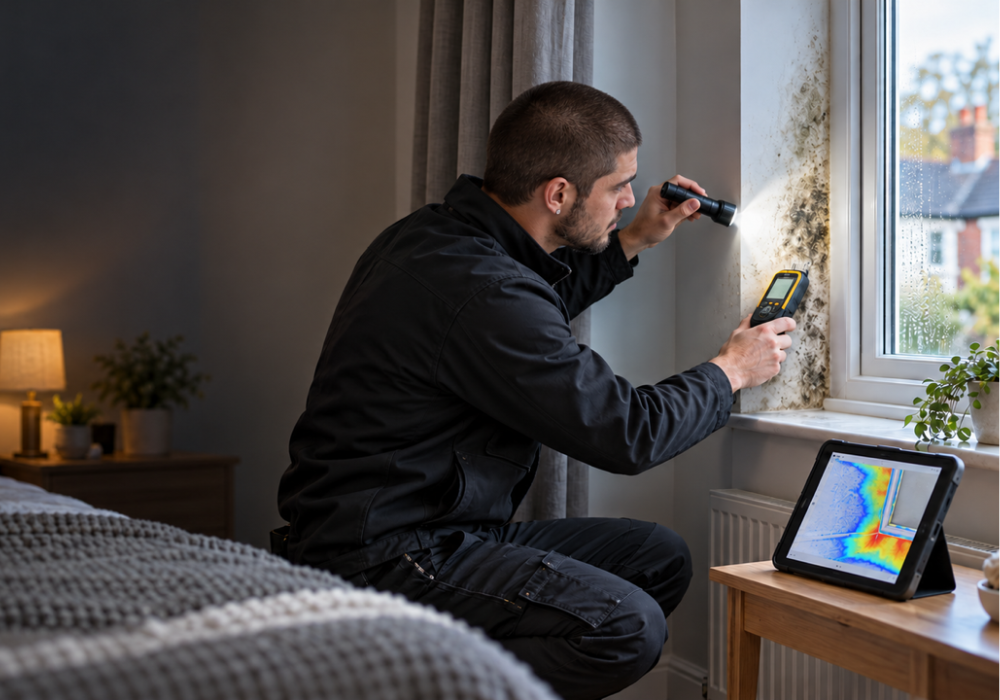
  • Escape-of-water assessment and structural drying
  • Moisture mapping and remote environmental monitoring
  • Fire and smoke damage assessment and restoration
  • Mould investigation and remediation
  • Leak detection, thermal imaging and trace-and-access support
  • Sewage, biohazard and contamination response
  • Oil and fuel spill cleanup/remediation
  • Air-quality testing and environmental investigation where appropriate

Our insurance-claim support process

1.

Instruction and triage

We confirm the requested scope, urgency, property type, known cause and any immediate access or safety issues.

2.

Site assessment

We document the affected areas, relevant moisture or contamination conditions, materials, visible damage and immediate mitigation needs.

3.

Restoration recommendation

We set out the proposed approach, including what can remain, what may require removal, equipment requirements and any further investigation needed.

4.

Approval and mobilisation

Work proceeds within the agreed authority and scope. Where new information changes the strategy, it is reported rather than assumed.

5.

Monitoring and communication

Drying data, progress findings, photographs and significant changes are recorded and communicated through the project.

6.

Completion information

We provide the agreed completion evidence and recommendations for any follow-on repair, reinstatement or specialist work outside our direct scope.

Why this matters to the claims lifecycle

A restoration claim can become more expensive when damage continues unnoticed, when drying is not measured, when contaminated materials are treated as ordinary water damage or when unnecessary removal creates avoidable reinstatement. Conversely, holding materials that are genuinely beyond restoration can also prolong the claim. Our role is to provide the technical evidence needed to make those decisions proportionately and at the right time.

Where practical, technologies such as moisture mapping, data logging and remote environmental monitoring can reduce unnecessary site visits while giving the project team better visibility of conditions between physical inspections. These tools support decision-making; they do not replace technician assessment where the building or loss requires it.

Frequently asked questions

Can Humidity Response work directly from an insurer instruction?

Yes. The exact route depends on the claim and appointment, but we can work to an agreed instruction, reporting format and authority level and communicate with the insurer, loss adjuster, claims handler or policyholder as required.

What information do you provide after the first visit?

Depending on the instruction, this can include photographs, affected-area observations, moisture readings or maps, contamination considerations, an initial restoration strategy, equipment requirements and recommendations for further access or investigation.

Do you automatically remove wet or smoke-damaged materials?

No. Removal should be justified by contamination, physical damage, material behaviour, access, restorability and the wider restoration strategy. Where retention is technically reasonable, controlled drying or cleaning may reduce unnecessary replacement.

Can you support large or technically complex claims?

Yes, subject to scope, location and resource requirements. We can scale drying, environmental monitoring, fire/smoke restoration and specialist response around larger domestic, commercial and public-sector losses.

Can you provide remote drying information?

Where suitable monitoring equipment is deployed, environmental and material data can be reviewed remotely. This can support oversight and reduce some non-essential journeys, although physical inspections remain necessary at appropriate stages.

Do you carry out reinstatement as part of the insurance claim?

Humidity Response is focused on specialist restoration, drying, remediation, diagnostics and environmental response. Any repair or reinstatement requirements outside our scope can be identified for the insurer or appointed contractor to progress.

Accreditations, Memberships and Professional Training

01_pqs
02_cqms
ICO_Logo_Blue
OnceForAll_-_Full_colour_RGB-scaled
05_safecontractor
06_ssip_smas_existing_website
07_builders_profile
08_citb
09_bdma_existing_website
10_iicrc_existing_website
11_pmii
Screenshot 2026-10-12 at 20.21.30
13. Dewpoint Tech Logo OCT26
14_trading_standards_checked
15_nasc_existing_website
15_nasc_scalable_alternative
16_cscs
17_bwca_small_icon