Thermal imaging for damp, condensation and building-environment investigations
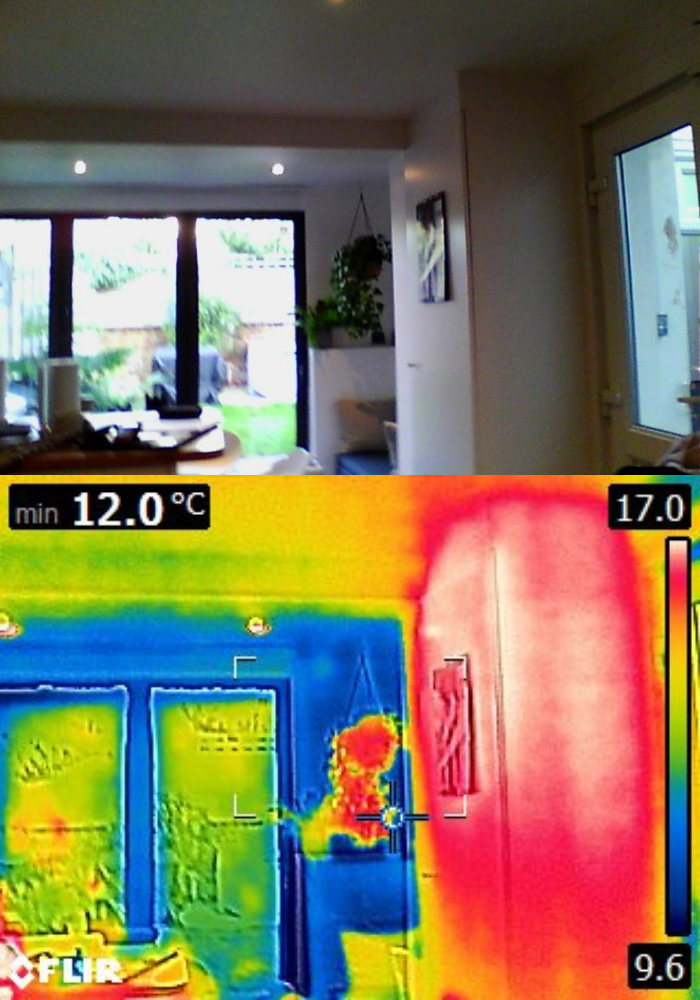
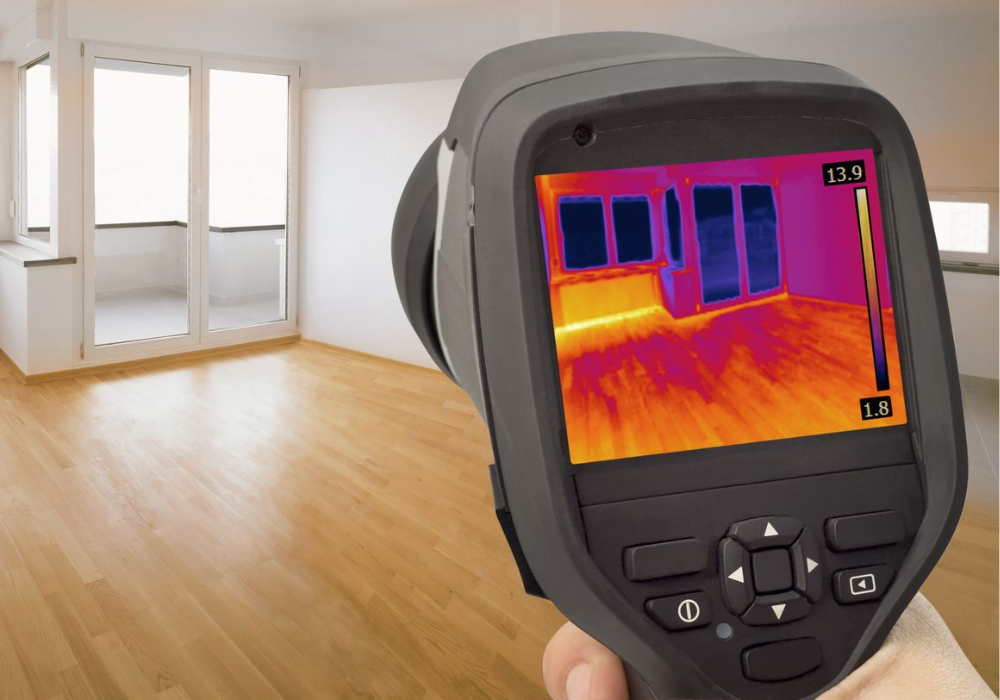
Thermal imaging allows large areas of a building to be scanned quickly for surface-temperature differences that are not obvious to the eye. In damp and mould investigations, those patterns can help identify cold bridges, insulation irregularities, air leakage, evaporative cooling and areas where concealed moisture or condensation risk should be checked more closely. The key is interpretation: a thermal image shows temperature, not water itself.
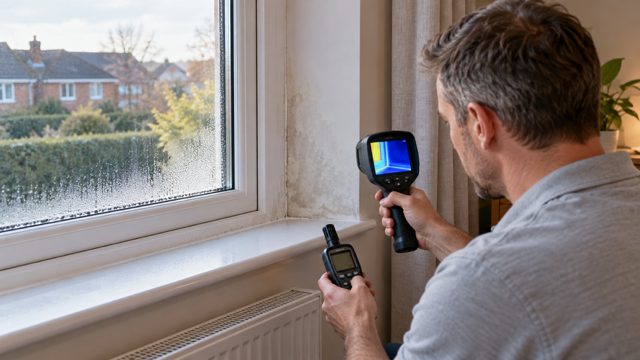
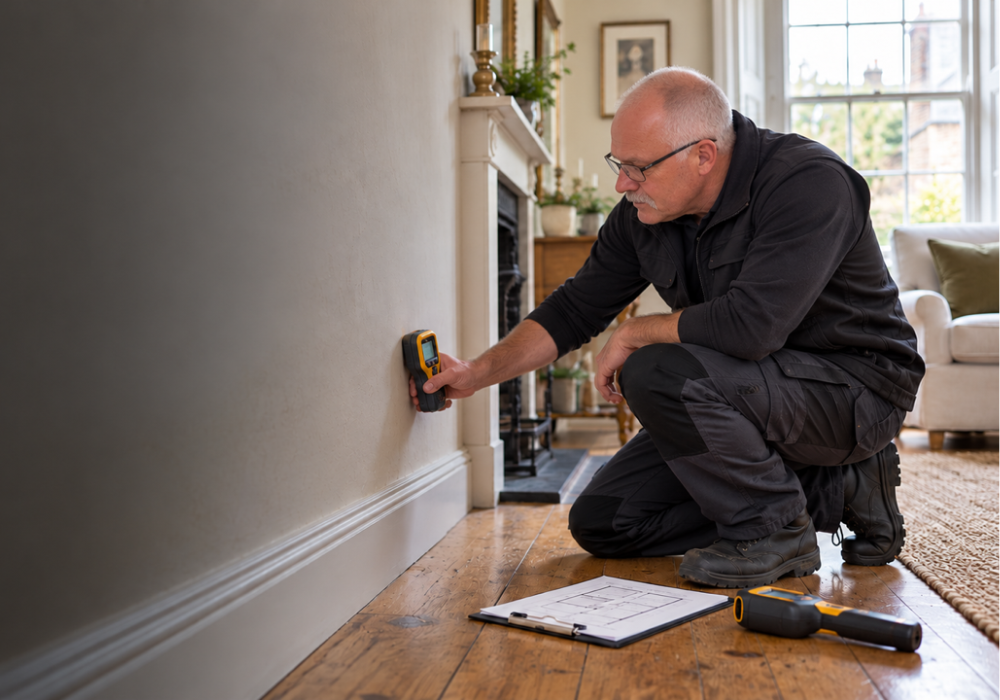
Humidity Response uses professional thermal imaging as part of wider building diagnostics rather than as a stand-alone “moisture camera”. Thermal findings are considered alongside moisture-meter readings, temperature and relative humidity, dew-point conditions, building construction and visual evidence. This approach allows us to target further investigation efficiently, document conditions clearly and reduce unnecessary opening-up where a non-invasive survey can narrow the area of concern first.