24 HOUR EMERGENCY RESPONSE: Call 0800 5999 009 or email info@humidityresponse.uk

Targeted Trace and Access that finds the source before opening the building unnecessarily

When a leak is concealed beneath a floor, behind a wall or within a service void, simply knowing that water is present is not enough. The source has to be traced and, where necessary, carefully exposed so that the appropriate repair can be completed. Poorly targeted opening-up can damage finishes, extend the claim and still fail to find the leak.

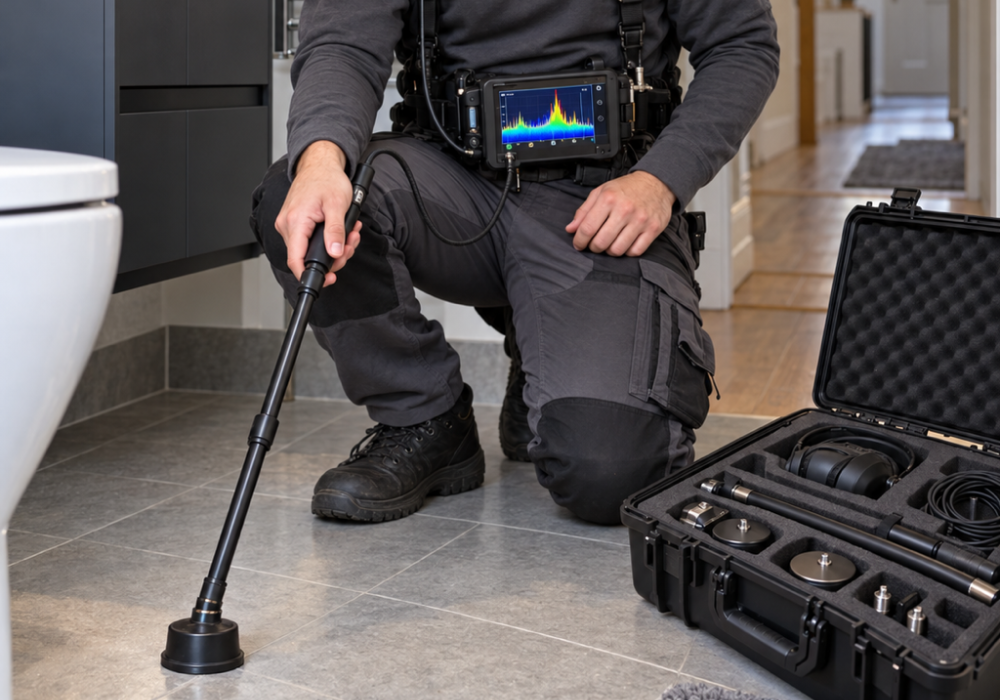
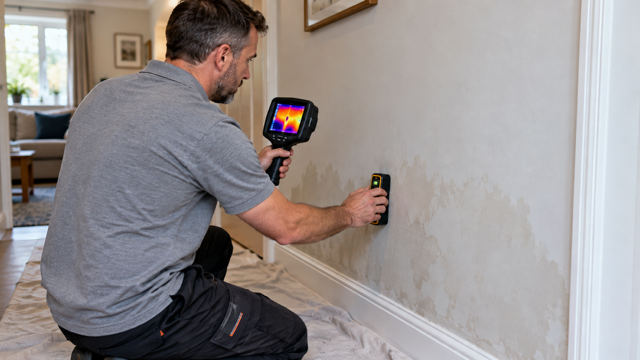
Humidity Response provides specialist Trace and Access as part of our leak-detection and water-damage services. We use non-invasive diagnostic methods first wherever practical, then use the evidence to identify the smallest reasonable access area. Depending on the problem, the trace stage may involve moisture mapping, thermal imaging, acoustic testing or tracer gas. Once the target is sufficiently defined and access is authorised, controlled opening-up can expose the pipe, fitting, service or construction detail for repair and allow the surrounding water damage to be properly assessed.

Why choose Humidity Response

Circle

Trace before access

We prioritise diagnostic evidence before destructive work so the opening is based on a reasoned target rather than trial and error.

Circle

Multiple diagnostic methods

Thermal imaging, acoustic equipment, tracer gas and moisture mapping can be combined to increase confidence before access begins.

Circle

Damage limitation

The objective is the smallest practical opening that gives safe access to the suspected source and sufficient visibility for confirmation.

Circle

Insurance experience

Trace and Access findings can be photographed and documented for insurers, loss adjusters, managing agents and property owners.

Circle

Water-damage assessment at the same visit

Once access is created, concealed moisture and the surrounding construction can be inspected so drying or remediation requirements are not missed.

Circle

Clear scope boundaries

Locating and exposing a leak is not automatically the same as carrying out the permanent pipe or roofing repair; the report and quotation can distinguish these stages clearly.

Our Trace and Access process

1.

Review the claim and symptoms

We establish the known damage, water source history, pressure behaviour, previous investigations, affected rooms and any policy or client requirements relating to Trace and Access.

2.

Carry out non-invasive tracing

Moisture mapping, thermal imaging, acoustic testing, tracer gas or other agreed methods are used to narrow the most probable source without unnecessary damage to the building.

3.

Cross-check and mark the target

The diagnostic evidence is compared and the target area is marked. Where there is residual uncertainty, the client is advised before any intrusive work begins and the proposed access is kept proportionate to the evidence available.

4.

Protect the work area and create controlled access

Appropriate dust, floor and contents protection is established. Floor coverings, boards, plasterboard, boxing or other finishes are opened only as required within the agreed scope and with consideration for hidden services and construction hazards.

5.

Expose and confirm the source

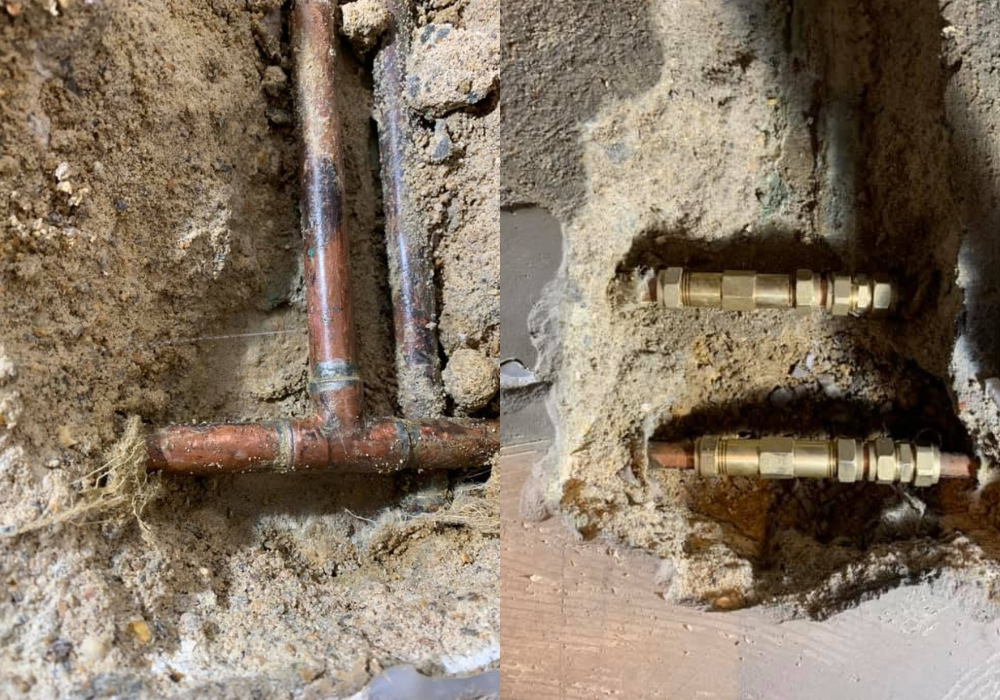
The suspected pipe, fitting, waste, service or construction detail is exposed sufficiently to confirm the source or allow the repair specialist to complete the next stage. Photographs and observations are recorded before the area is altered further.

6.

Assess secondary damage and report

Concealed moisture, contamination, deterioration and the extent of water migration are checked. The report can then set out the confirmed source, access undertaken, repair requirement, drying needs and any further restoration or reinstatement actions.

Technical information

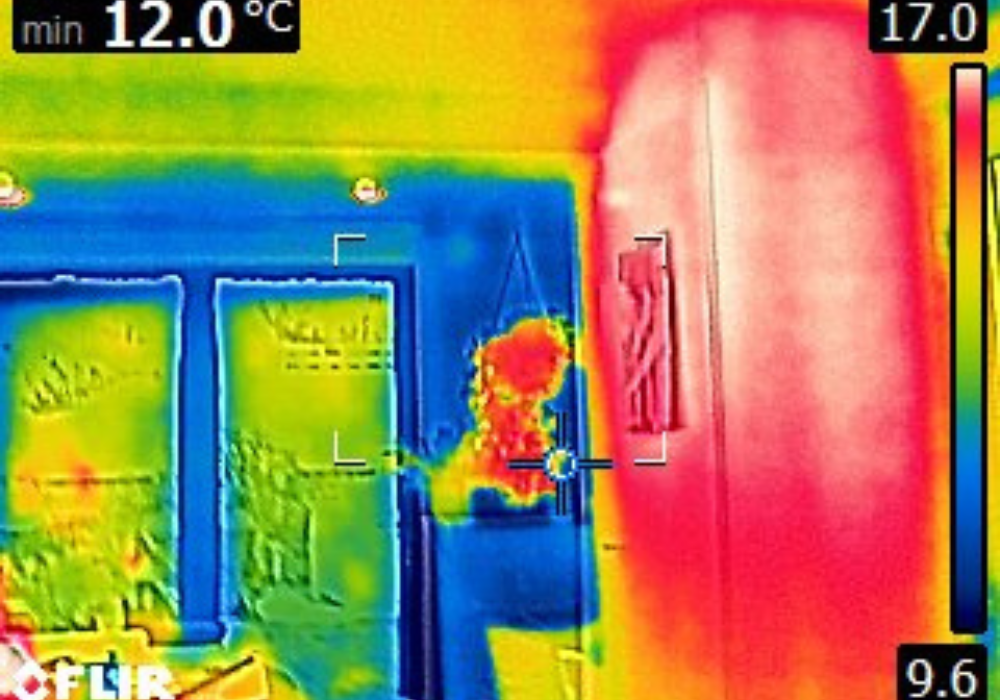
Trace and Access is most effective when it is treated as an evidence-led sequence rather than a single destructive task. Thermal imaging can identify temperature anomalies, acoustic equipment can detect pressurised escape noise, tracer gas can locate very small defects in suitable sealed systems, and moisture mapping can show how the resulting water has migrated through the structure. Each method contributes a different part of the picture.

The access location is selected from the combined evidence and practical repair requirements. The nearest visible stain may not be the best place to open the building if the moisture has tracked from another room or along a service route. Equally, a diagnostic indication may need to be approached from the opposite side of a wall or from an adjacent floor area if that creates safer and less disruptive access.

Before opening floors or walls, the work area needs to be considered for hidden electrical services, gas services, pipework, underfloor heating, asbestos-containing materials or other hazards. The intrusive scope is adjusted where necessary, and additional specialist information may be required before access can proceed safely.

Insurance terminology can also cause confusion. Trace and Access commonly refers to the reasonable work required to locate and expose the source of a concealed leak, but individual policy wording and cover vary. Humidity Response documents the technical work undertaken; the policyholder or insurer remains responsible for confirming what costs are covered under the specific insurance contract.

Once the source is exposed, repairing the pipe or defect may be a separate trade activity. Where the permanent repair is not part of Humidity Response’s agreed scope, the area can be left safely accessible for the plumber, heating engineer, roofer or other specialist. After the source has been repaired, moisture mapping and structural drying can continue so the property is not reinstated over hidden moisture.

Typical applications

  • Concealed escape of water beneath floors or behind walls
  • Central-heating and underfloor-heating leaks
  • Leaks within bathrooms, kitchens and service voids
  • Insurance claims with Trace and Access cover
  • Commercial and managed properties where exploratory strip-out must be minimised
  • Repeated leaks where previous investigations have failed to identify the source
  • Cases requiring targeted access before structural drying or reinstatement

Frequently asked questions

What is the difference between leak detection and Trace and Access?

Leak detection is the diagnostic process used to locate or narrow the source. Trace and Access includes the targeted opening-up needed to physically expose that source where it is concealed. They often form part of the same instruction but are distinct stages.

Will you have to damage my floor or wall?

Not necessarily during the trace stage. We use non-invasive methods first where appropriate. If the source is concealed, some controlled access may ultimately be required, but the objective is to make that access as targeted and limited as practical.

Do you repair the leaking pipe once you expose it?

The permanent repair is not automatically included in a Trace and Access instruction. We can expose and document the source and coordinate the next stage, but plumbing, heating or roofing repair is separately agreed and may be undertaken by the appropriate specialist trade.

Will Trace and Access be covered by my insurance?

Many buildings policies include some form of Trace and Access cover, but policy wording, limits and exclusions vary. You should confirm the cover with your insurer or broker. We can provide the technical report and evidence required to support the claim process.

What happens if the first test does not find the leak?

Some leaks are intermittent or affected by pressure, temperature, weather and building construction. If the evidence is inconclusive, we explain the limitation and recommend the next appropriate method or a narrowed intrusive investigation rather than opening large areas without a technical basis.

Can you dry the property after the leak is repaired?

Yes. Leak detection and Trace and Access integrate directly with our Water & Flood Recovery services. Once the source is controlled, we can moisture-map the affected materials, design the drying strategy and monitor progress through to the agreed dry standard.

Accreditations, Memberships and Professional Training

01_pqs
02_cqms
ICO_Logo_Blue
OnceForAll_-_Full_colour_RGB-scaled
05_safecontractor
06_ssip_smas_existing_website
07_builders_profile
08_citb
09_bdma_existing_website
10_iicrc_existing_website
11_pmii
Screenshot 2026-10-12 at 20.21.30
13. Dewpoint Tech Logo OCT26
14_trading_standards_checked
15_nasc_existing_website
15_nasc_scalable_alternative
16_cscs
17_bwca_small_icon