Technical information
Different moisture meters report different types of information. In timber, instruments may provide a percentage moisture-content reading. In many other building materials, non-invasive meters provide comparative or reference values rather than a universal percentage that can be interpreted in the same way across plaster, masonry, tile, roofing and screed. The technician therefore needs to select the correct scale, understand the material and compare readings intelligently.
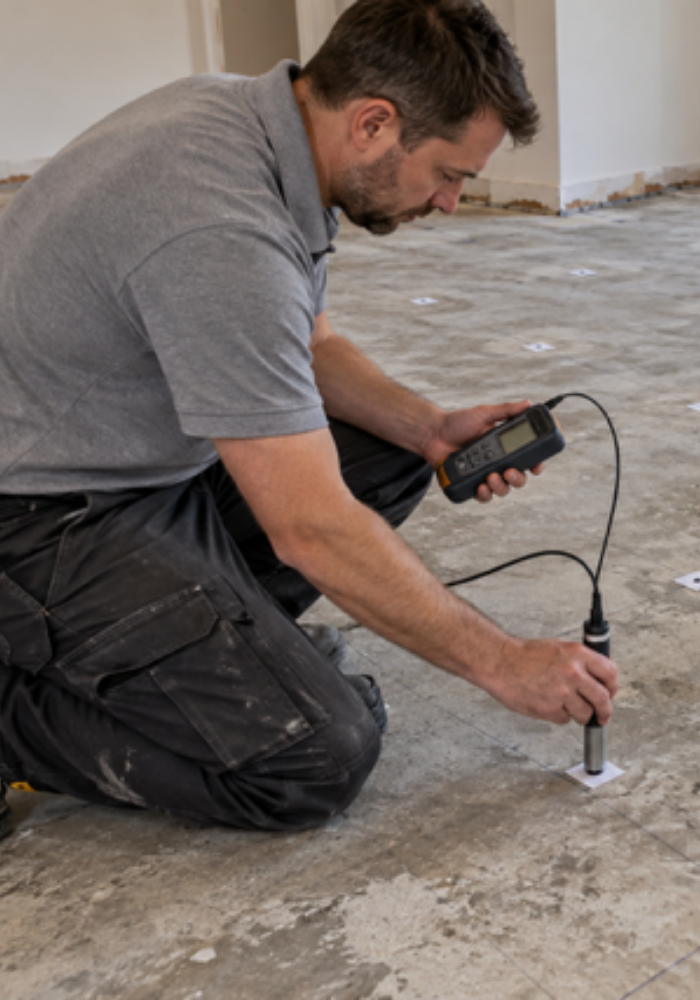
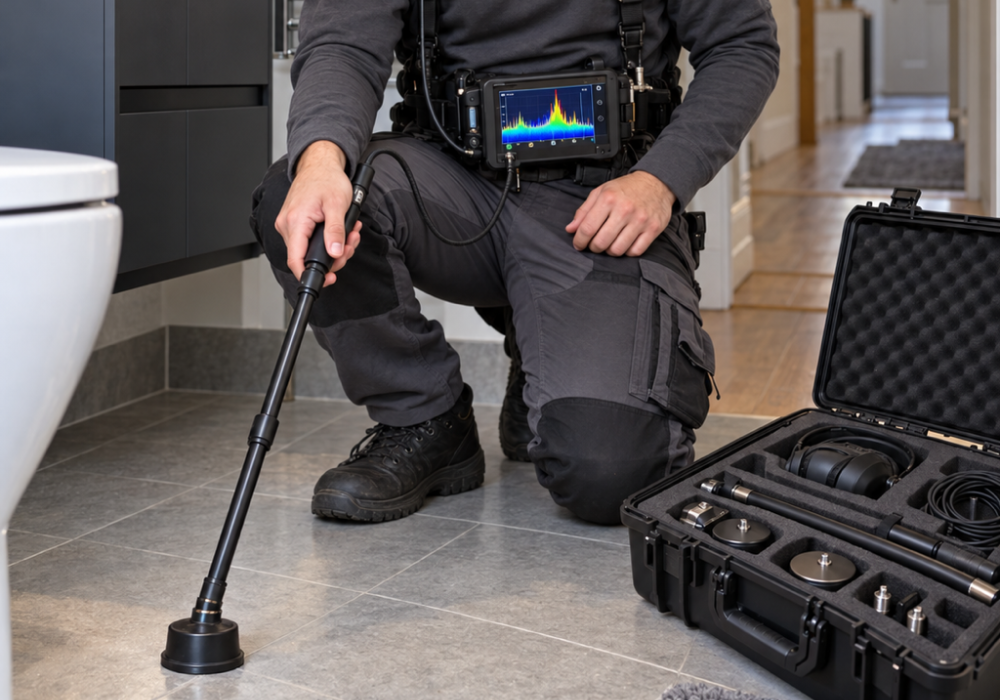
Professional Tramex instrumentation is well suited to this approach because non-destructive meters can rapidly scan large areas and readings can be recorded into digital moisture maps and reports. Depending on the construction, deeper investigation may use pin/probe methods or relative-humidity probes in materials and cavities. Concrete floors require particular care because surface readings alone may not describe the moisture condition deeper within the slab or screed.
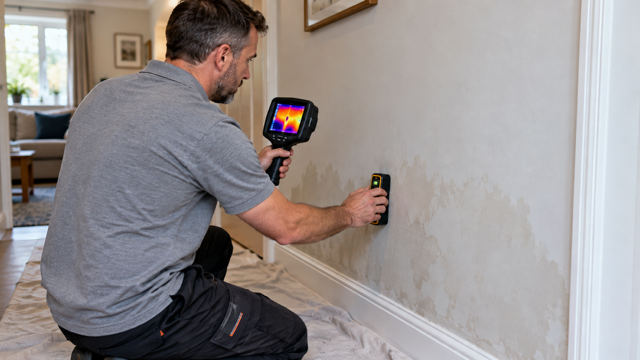
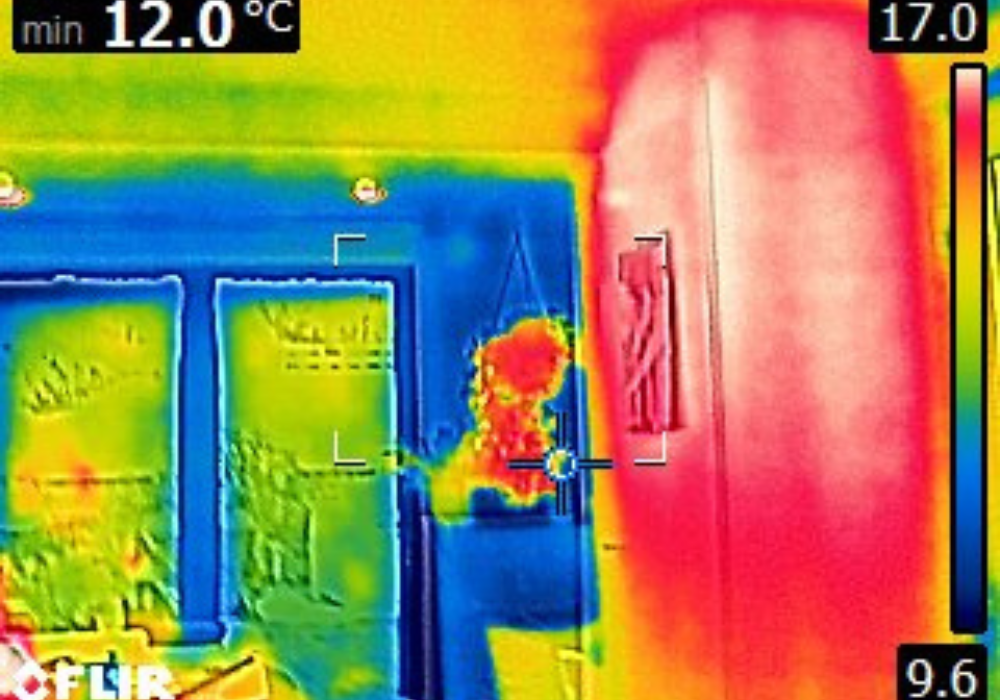
Thermal imaging can accelerate the mapping process by identifying temperature anomalies that deserve closer measurement, but it remains a screening tool. A cool thermal pattern may be associated with evaporative moisture, but it can also result from insulation, air movement or construction. The suspected area is therefore verified with moisture instruments before it is labelled as wet.
Moisture maps are especially valuable when they are repeated through a drying programme. They provide a visual record of the affected boundary reducing, stabilising or failing to improve. If one location remains elevated while surrounding areas dry, the pattern may indicate trapped moisture, an unaddressed source, poor airflow, a dense material or the need for a different drying technique.
The final dry standard is project- and material-specific. Affected readings may be compared with unaffected areas of the same construction, recognised material thresholds, in-situ relative-humidity criteria, floor-finish requirements or other agreed targets. Humidity Response records the basis used so the client can understand why drying is being continued or concluded.