24 HOUR EMERGENCY RESPONSE: Call 0800 5999 009 or email info@humidityresponse.uk

Smoke odour removal that targets the source, not just the smell

Persistent smoke odour is rarely solved by spraying a fragrance into the room. Fire odours can remain because soot and condensed smoke residues are still present on surfaces, within porous materials, inside contents or in concealed areas. Temperature and humidity changes may also make an apparently improved area smell smoky again if the underlying source has not been addressed.

Humidity Response approaches odour removal as part of the wider restoration process. We identify likely odour sources, remove non-restorable contaminated material where required, clean salvageable surfaces and contents, review ventilation and air pathways, and then select further deodorisation techniques where cleaning alone is not sufficient. This source-led approach is designed to achieve a more durable result while avoiding unnecessary treatments or products that simply cover one odour with another.

Why choose Humidity Response

Circle

Source-led investigation

We look for the residues or materials generating the odour rather than treating the air alone.

Circle

Integrated with smoke cleaning

Odour management is planned alongside soot removal, decontamination and structural drying so each part of the loss supports the others.

Circle

Material-specific decisions

Porous and semi-porous materials can retain odour differently from sealed surfaces, so treatment, sealing or removal decisions are made accordingly.

Circle

Multiple treatment options

Where further deodorisation is required, the technique is selected to suit the source, building, materials, occupancy and health-and-safety requirements.

Circle

Reassessment before completion

Odour is reviewed after cleaning and environmental stabilisation so remaining sources can be identified instead of assuming one treatment has solved the problem.

Circle

Domestic and commercial capability

The same source-control principles can be applied to homes, schools, offices, communal buildings and larger commercial losses, with the scale of the system adapted to the site.

Our smoke odour removal process

1.

Odour-source assessment

We review the fire history, rooms affected, visible smoke residues, porous materials, contents, HVAC or air pathways and any areas where contamination may be concealed.

2.

Remove non-restorable sources

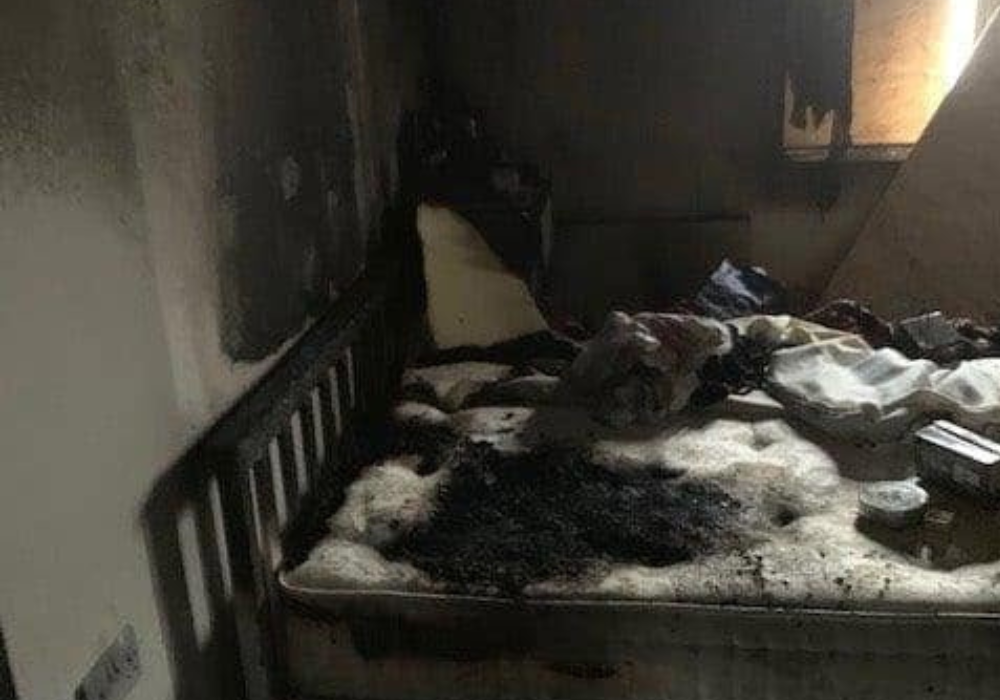
Heavily burned debris, charred materials or other components that continue to generate odour are removed where authorised and appropriate before deodorisation begins.

3.

Clean recoverable surfaces and contents

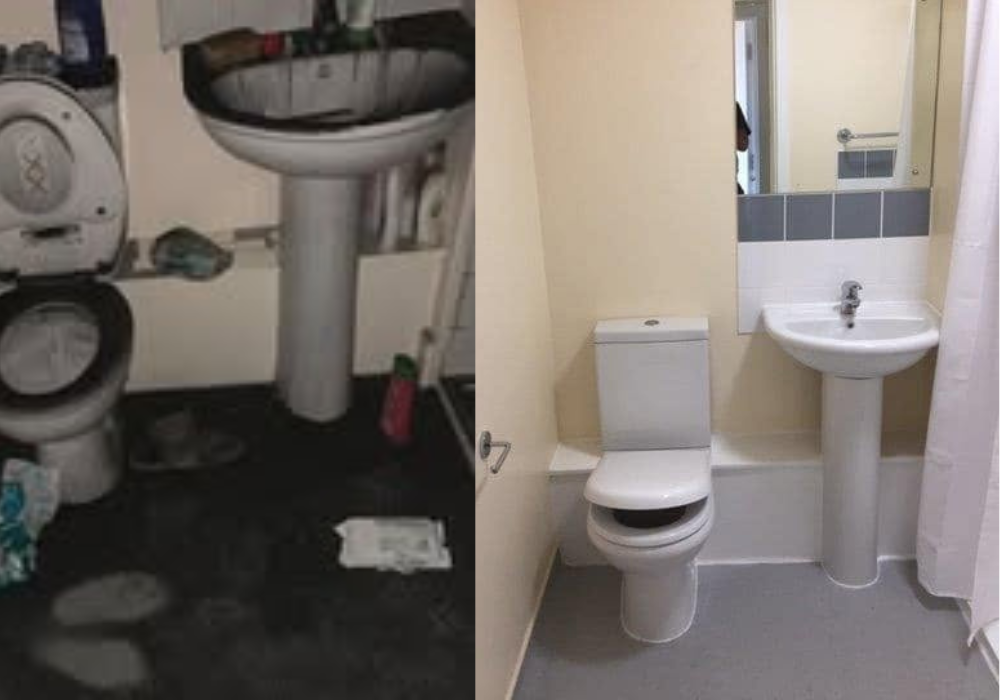
Soot and deposited residues are removed using methods suited to the material, because effective cleaning can substantially reduce the odour load before additional treatment is considered.

4.

Stabilise the environment

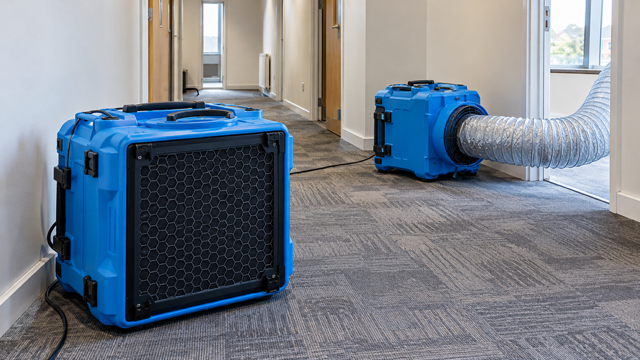
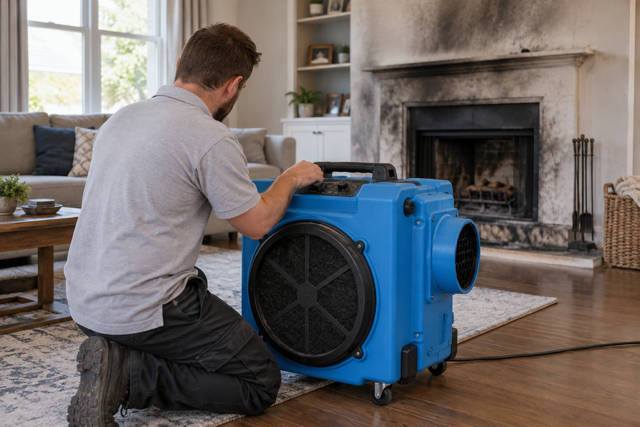
Where firefighting water or elevated humidity is present, drying and environmental control are addressed. Air exchange or filtration may also be used where appropriate to support the cleaning process.

5.

Apply further deodorisation where required

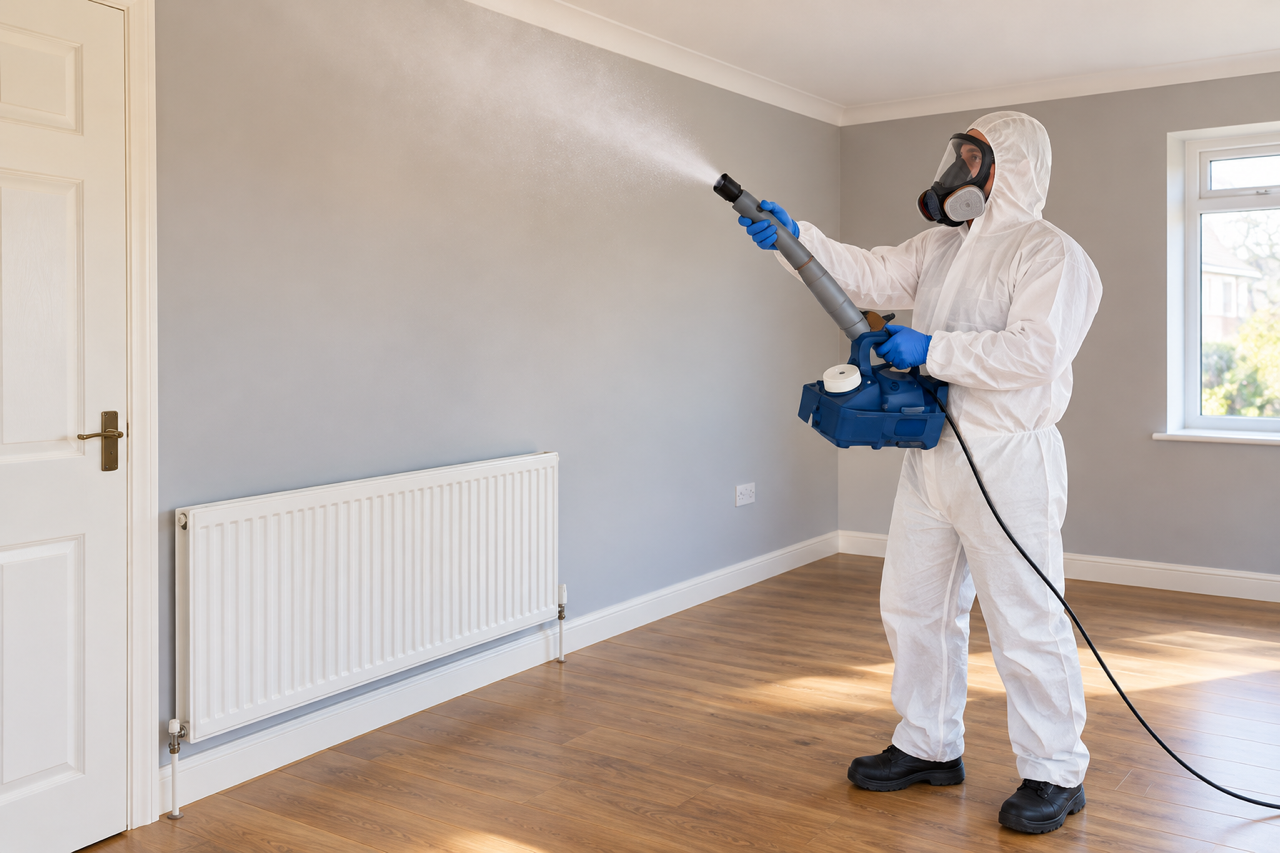
If odour remains after source cleaning, specialist deodorisation methods can be selected for the individual loss and applied under a controlled method appropriate to the occupied environment and affected materials.

6.

Reassess and document

The property is reviewed after treatment and normalisation of conditions. Any remaining localised source, material requiring sealing or removal, or further treatment is identified before completion.

Technical information

Smoke odour is created by volatile and semi-volatile compounds associated with combustion and deposited residues. These compounds can adsorb onto surfaces or be absorbed into porous materials such as timber, plaster, textiles, insulation and furnishings. The odour therefore cannot always be treated effectively by changing the room air while leaving contaminated materials untouched.

Source removal is the foundation of odour control. Charred debris, heavily contaminated porous material and loose soot can continue to release odour. Detailed cleaning reduces the contaminant load on retained surfaces; only after this stage can the remaining odour problem be judged accurately. In some cases a surface may require an appropriate sealer during reinstatement if residues cannot be fully removed but the material remains suitable for retention.

Air treatment can support the process but should be matched to the loss. Ventilation, filtration, adsorbent media and specialist deodorisation treatments each have different purposes and limitations. Some techniques require controlled application, temporary exclusion of occupants or specific re-entry procedures. Humidity Response selects the method from the assessment rather than using one odour technology on every incident.

Odour can also become more noticeable when temperature or humidity changes. This is one reason a room should be reassessed after cleaning and environmental stabilisation rather than judged immediately after a deodorising product has been applied. Where smoke has entered HVAC or concealed building cavities, residual odour may indicate that those areas require further investigation.

Typical applications

  • Persistent smoke smell after domestic fires
  • Kitchen and cooking-oil fire odours
  • Smoke-affected offices, schools and commercial premises
  • Odour retained in porous finishes, furnishings and selected contents
  • Post-fire rooms where visible soot has been cleaned but odour remains
  • Properties affected by smoke migration from adjoining areas
  • Fire losses requiring integrated cleaning, drying and deodorisation

Frequently asked questions

Can you guarantee that every smoke odour will disappear completely?

No responsible assessment can guarantee that before the source and affected materials have been investigated. Many smoke odours can be successfully removed or substantially reduced, but the outcome depends on the degree of contamination, porosity, access and whether all relevant source materials can be cleaned or removed.

Why does the smoke smell come back after the room seemed better?

Residual contamination within porous or concealed materials can release odour again as temperature and humidity change. This usually means the underlying source needs further investigation rather than another fragrance treatment.

Do you just use an odour machine?

No. Equipment or deodorisation products are only part of the solution where appropriate. Our first priorities are source removal, smoke cleaning and environmental control, followed by targeted treatment if odour remains.

Can carpets, furniture and soft furnishings hold smoke odour?

Yes. Porous and textile materials can retain smoke residues and odour. Whether they can be restored depends on the material, contamination level, heat damage and the cleaning method available. Some items may require specialist off-site contents restoration.

Will painting the walls remove the smell?

Not by itself. Contaminated surfaces should first be assessed and cleaned. Where a retained surface still requires encapsulation, an appropriate stain or odour-blocking system may form part of the reinstatement specification after the restoration clean.

Is it safe to stay in the property while odour treatment is being carried out?

It depends on the method being used and the area affected. Some cleaning and deodorisation techniques can be completed with controlled access, while others may require temporary exclusion and defined re-entry conditions. We confirm this within the site-specific method before treatment begins.

Accreditations, Memberships and Professional Training

01_pqs
02_cqms
ICO_Logo_Blue
OnceForAll_-_Full_colour_RGB-scaled
05_safecontractor
06_ssip_smas_existing_website
07_builders_profile
08_citb
09_bdma_existing_website
10_iicrc_existing_website
11_pmii
Screenshot 2026-10-12 at 20.21.30
13. Dewpoint Tech Logo OCT26
14_trading_standards_checked
15_nasc_existing_website
15_nasc_scalable_alternative
16_cscs
17_bwca_small_icon