24 HOUR EMERGENCY RESPONSE: Call 0800 5999 009 or email info@humidityresponse.uk

Professional mould remediation with controlled removal, HEPA cleaning and moisture-source management

Mould remediation is more than wiping visible growth from a wall. Where contamination is established, the work needs to control unnecessary spread, remove or clean affected materials, manage dust and spores generated during the works, and leave retained surfaces in a condition suitable for the next stage. Just as importantly, the moisture problem that allowed mould to grow must be corrected or the risk of recurrence remains.

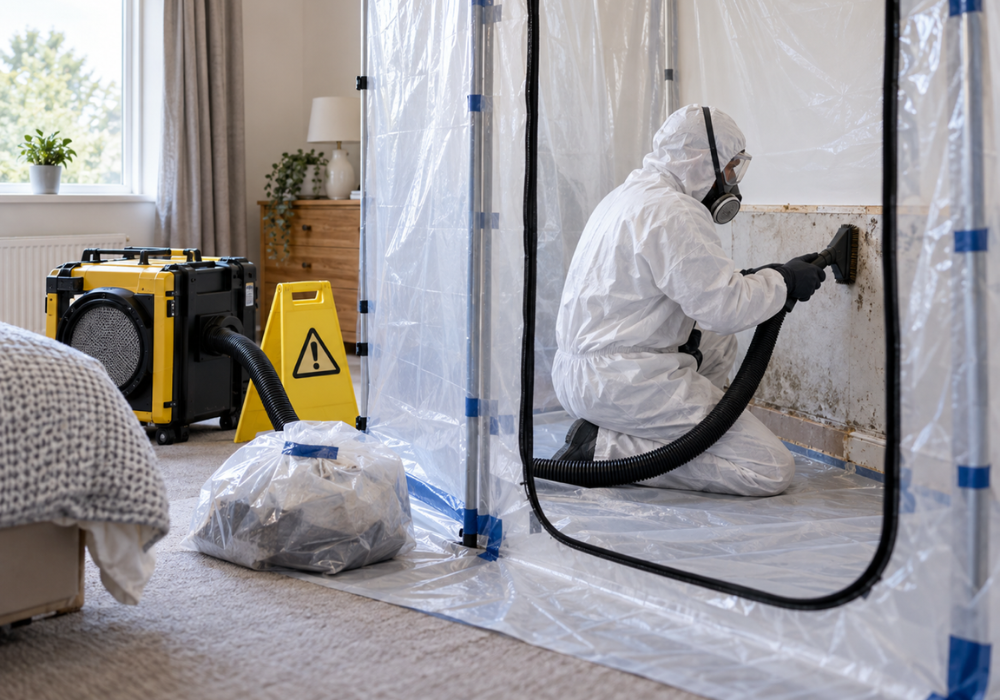
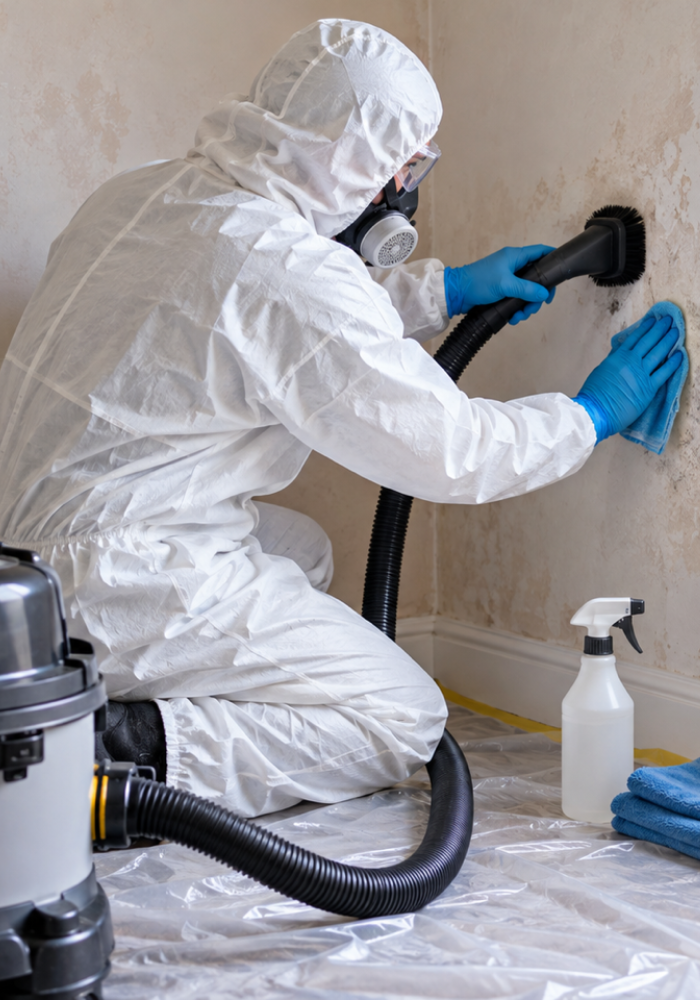
Humidity Response carries out mould remediation in domestic, commercial and managed properties using a site-specific method developed from the investigation and the materials affected. Depending on the extent and risk, the works can include controlled work-zone segregation, suitable PPE and RPE, HEPA-filtered air scrubbing and vacuuming, removal of non-restorable porous materials, detailed cleaning of retained substrates, appropriate antimicrobial treatment, controlled waste handling, drying and post-work documentation. We do not present a spray treatment as a substitute for proper source control and physical remediation.

Why choose Humidity Response

Circle

Site-specific methodology

The work plan is based on the affected extent, material type, occupancy, moisture source and access rather than applying the same treatment to every mould problem.

Circle

Containment and cross-contamination control

Work zones, access and air management can be established where required to reduce the movement of dust, spores and debris into unaffected areas.

Circle

HEPA-filtered particulate removal

HEPA vacuuming and air scrubbing can be used as part of the remediation process to capture fine particulate released during cleaning or controlled removal.

Circle

Material-led decisions

Sound retained timber and hard substrates may be capable of detailed remediation, while badly contaminated, deteriorated or inaccessible porous materials may require controlled removal.

Circle

Antimicrobial treatment used appropriately

Professional mould-treatment products can support the cleaning process where suitable, but only after source removal and physical cleaning have been addressed and in accordance with product guidance and COSHH requirements.

Circle

Documented completion

Photographs, scope records, moisture information, limitations and recommendations provide a clear record for the client and any insurer, landlord or property manager involved.

Our mould remediation process

1.

Pre-start assessment and method statement

The confirmed or suspected affected area, moisture condition, materials, access, occupancy and any known hazards are reviewed. The method, risk assessment, PPE/RPE and waste route are planned before disturbance begins.

2.

Protect and control the work area

Furniture and unaffected items are removed or protected where appropriate. Controlled access, local containment and HEPA-filtered air management may be established according to the size and location of the remediation area.

3.

Remove non-restorable source materials

Porous materials that cannot be cleaned effectively or have lost structural integrity are removed in a controlled manner where authorised. Waste is bagged or contained to reduce unnecessary transfer through the property.

4.

HEPA vacuum and detailed physical cleaning

Loose particulate is reduced using HEPA-filtered equipment. Retained surfaces are then cleaned using methods suited to the substrate, which may include repeated vacuuming, agitation, wiping or other controlled techniques until the agreed physical-cleanliness objective is achieved.

5.

Apply appropriate treatment and dry retained materials

Where specified and compatible with the substrate, an antimicrobial or mould-treatment product may be applied in accordance with the manufacturer’s instructions and COSHH assessment. Any damp retained structure is then dried to appropriate conditions, and the underlying moisture source must be repaired or otherwise controlled.

6.

Final clean, review and reporting

The work area, equipment route and retained surfaces are final-cleaned. Visible growth, dust, moisture conditions and any remaining limitations are reviewed. Where independent post-remediation verification or laboratory testing has been specified, this is completed to the agreed protocol before the area is released.

Technical information

Professional mould remediation is fundamentally a source-removal and cleaning process. Killing or treating organisms on a dirty surface does not remove the physical contamination, allergens or fragments that remain on the material. This is why the methodology gives priority to controlled removal of unsalvageable source materials and detailed physical cleaning of retained surfaces.

HEPA filtration is used to support particulate control. HEPA-filtered vacuum cleaners remove fine dust and settled contamination from surfaces, while HEPA air scrubbers can help reduce airborne particulate generated during the works. Where the risk assessment and layout justify it, filtered air management can also support pressure control within a contained work zone. These controls support the remediation; they do not replace cleaning the actual contaminated materials.

PPE and RPE are selected from the task and risk assessment. Mould remediation can disturb spores, fragments, dust and cleaning products, so technicians may require protective clothing, gloves, eye protection and suitable respiratory protection. Tight-fitting RPE must be appropriate for the wearer and used within a proper face-fit and respiratory-protection programme.

Porosity matters. Smooth, sound surfaces are generally more straightforward to clean than deeply contaminated porous materials. Plasterboard, insulation, ceiling tiles, carpets or other absorbent products may require removal where contamination cannot be practically cleaned. Sound structural timber may often be retained if it can be accessed, physically cleaned, dried and left structurally suitable; the method depends on its condition and extent of growth.

The moisture cause remains critical after the cleaning is complete. Roof or plumbing leaks, poor ventilation, cold bridging, trapped water, inadequate heating or other building deficiencies must be addressed through the appropriate repair or environmental intervention. Without this, even a well-executed remediation can be followed by new growth when moisture conditions return.

Typical applications

  • Mould growth following escape of water or flooding
  • Recurring mould to bedrooms, bathrooms and living areas
  • Housing association and local-authority remediation programmes
  • Commercial, school and communal-building mould contamination
  • Mould-affected structural timbers and retained building substrates
  • Contaminated porous finishes requiring controlled removal
  • Insurance losses requiring a documented remediation methodology

Frequently asked questions

Do you just spray the mould with a chemical?

No. A professional remediation plan prioritises source control, removal of non-restorable materials and physical cleaning. Antimicrobial or mould-treatment products may be used where appropriate, but they are one tool within the process rather than the entire treatment.

What does HEPA vacuuming do?

A HEPA-filtered vacuum is used to capture fine settled particulate from surfaces without exhausting the collected material back into the work area. It is commonly combined with detailed cleaning and, where appropriate, HEPA-filtered air scrubbing.

Will all plasterboard or timber have to be removed?

No. The decision depends on material type, structural condition, porosity, extent of growth and whether the surface can be accessed and cleaned effectively. Some porous materials may need removal, while sound timber and other retained substrates may be capable of remediation.

Will the mould come back after remediation?

The risk of recurrence is greatly influenced by the moisture source. If the underlying leak, condensation, ventilation, heating or building-fabric problem remains, new mould can develop even after successful cleaning. Our recommendations therefore address the cause as well as the contamination.

Do occupants need to leave during mould remediation?

That depends on the size, location and method of the works, the people occupying the property and the control measures being used. Some areas can be isolated locally; more extensive or higher-risk work may require temporary exclusion from part or all of the property.

Do you carry out testing after the mould is removed?

The completed work is reviewed visually and against the agreed scope, including moisture conditions and physical cleanliness. Air or other laboratory sampling can be arranged where it has been specified for the project, but post-remediation sampling is not automatically required on every job.

Accreditations, Memberships and Professional Training

01_pqs
02_cqms
ICO_Logo_Blue
OnceForAll_-_Full_colour_RGB-scaled
05_safecontractor
06_ssip_smas_existing_website
07_builders_profile
08_citb
09_bdma_existing_website
10_iicrc_existing_website
11_pmii
Screenshot 2026-10-12 at 20.21.30
13. Dewpoint Tech Logo OCT26
14_trading_standards_checked
15_nasc_existing_website
15_nasc_scalable_alternative
16_cscs
17_bwca_small_icon