24 HOUR EMERGENCY RESPONSE: Call 0800 5999 009 or email info@humidityresponse.uk

Thermal imaging for damp, condensation and building-environment investigations

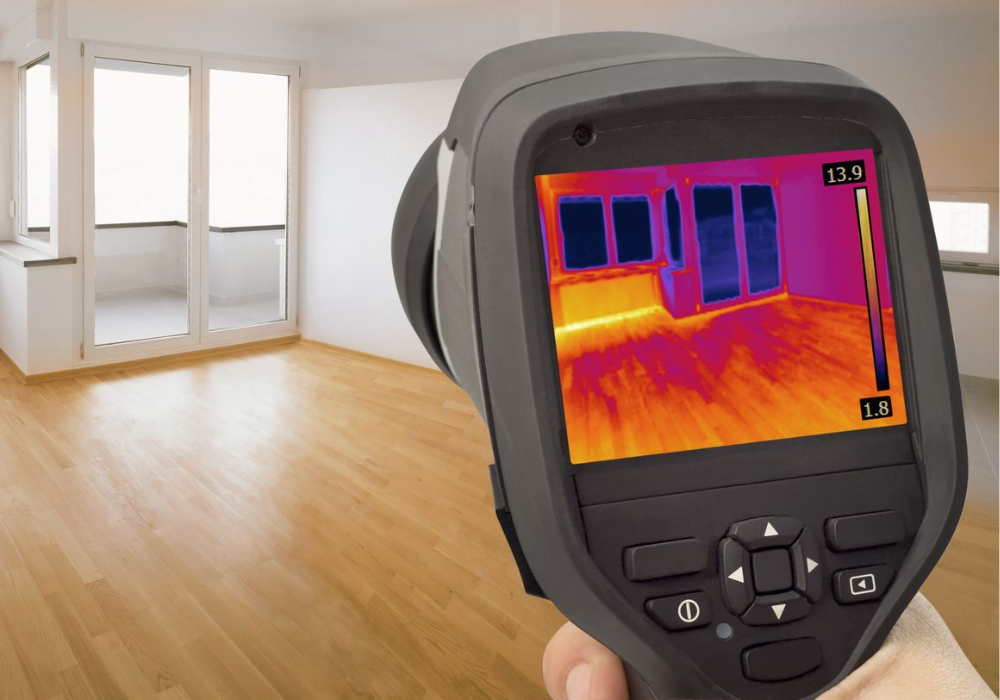
Thermal imaging allows large areas of a building to be scanned quickly for surface-temperature differences that are not obvious to the eye. In damp and mould investigations, those patterns can help identify cold bridges, insulation irregularities, air leakage, evaporative cooling and areas where concealed moisture or condensation risk should be checked more closely. The key is interpretation: a thermal image shows temperature, not water itself.

Humidity Response uses professional thermal imaging as part of wider building diagnostics rather than as a stand-alone “moisture camera”. Thermal findings are considered alongside moisture-meter readings, temperature and relative humidity, dew-point conditions, building construction and visual evidence. This approach allows us to target further investigation efficiently, document conditions clearly and reduce unnecessary opening-up where a non-invasive survey can narrow the area of concern first.

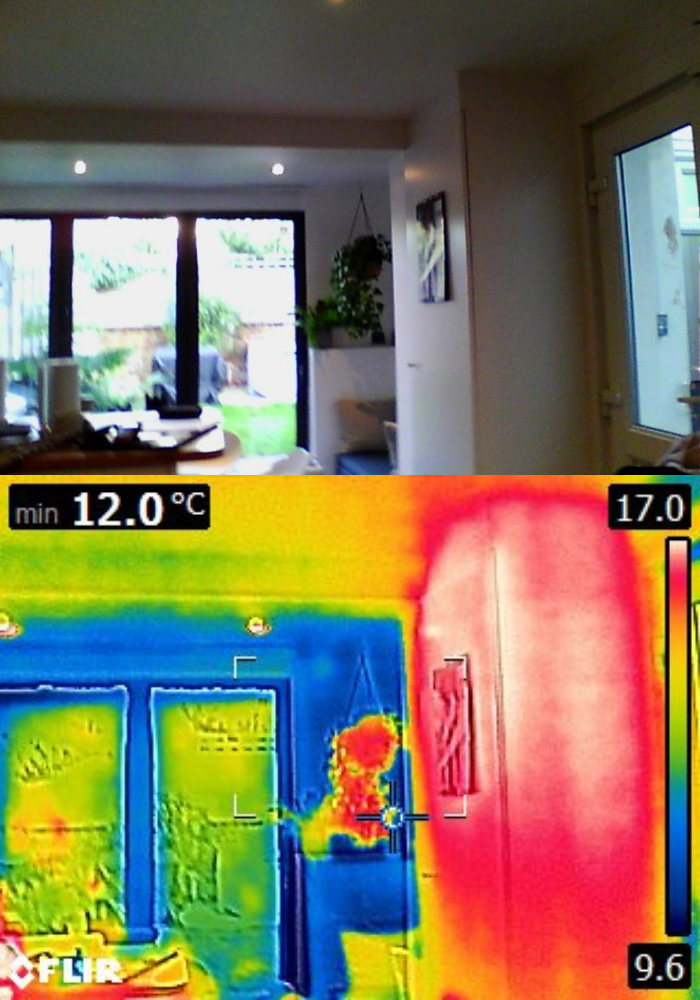
We also provide thermal imaging surveys that rapidly identify hidden patterns for targeted investigation, learn more here.

Why choose Humidity Response

Circle

Rapid non-invasive scanning

Walls, ceilings, floors and junctions can be assessed quickly to identify temperature patterns that deserve closer investigation.

Circle

Verification with moisture instruments

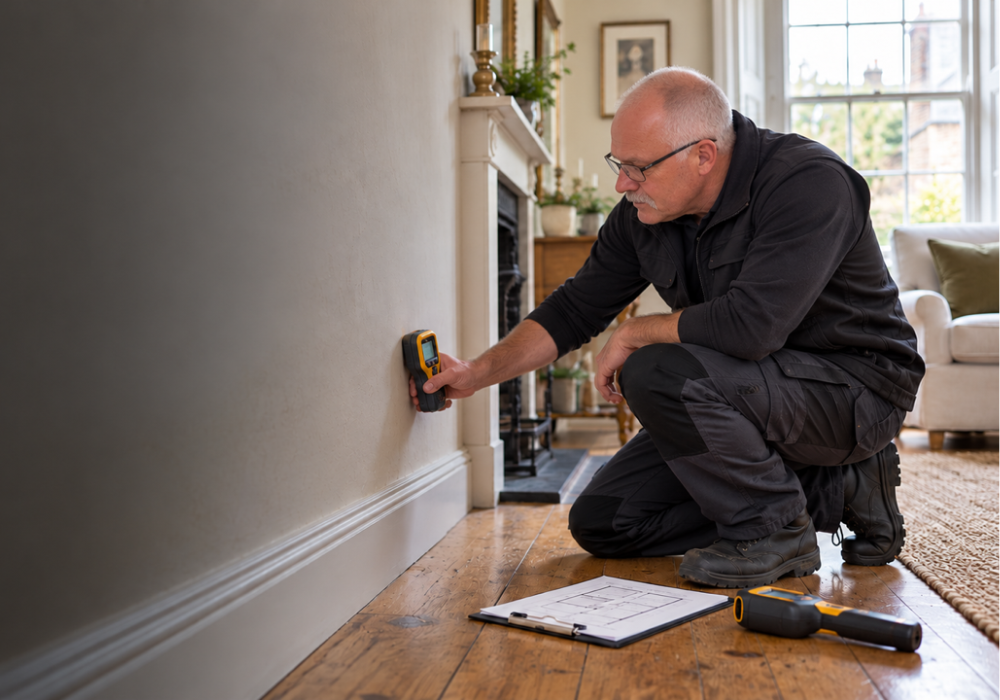
Suspected moisture anomalies are checked with suitable meters because temperature differences can have causes other than water.

Circle

Condensation and cold-bridge assessment

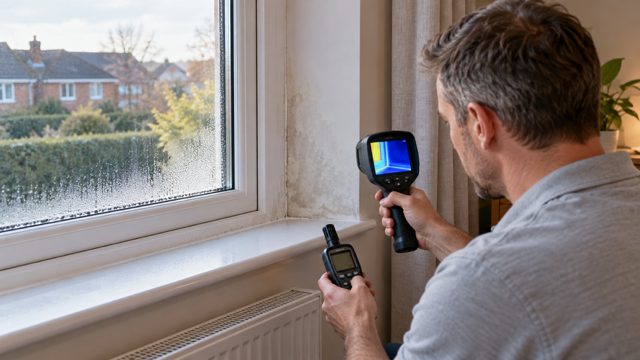
Thermal images can identify local cold surfaces that may spend more time close to dew point and therefore carry greater condensation and mould risk.

Circle

Building-fabric insight

Insulation gaps, thermal bridging and air leakage can produce distinctive patterns that help explain why one area of a room performs differently from another.

Circle

Clear visual documentation

Thermal and standard photographs can support reports for homeowners, landlords, insurers and property managers by showing where further investigation was targeted.

Circle

Integrated diagnostics

Thermal imaging can be combined with moisture mapping, environmental monitoring and damp or mould investigation rather than being treated as an isolated survey technique.

Our thermal imaging process

1.

Define the diagnostic question

We establish whether the survey is investigating damp, cold bridging, condensation risk, insulation performance, post-water-damage conditions or another building-environment concern.

2.

Review survey conditions

Indoor and outdoor temperatures, heating status, recent weather, solar gain, ventilation and other factors that can influence surface temperature are considered before interpreting the image.

3.

Scan the relevant building areas

Thermal images are captured across the suspect surfaces and compared with surrounding or reference areas to identify meaningful temperature patterns.

4.

Verify anomalies

Where a thermal pattern may indicate moisture, the location is checked with an appropriate moisture meter or other instrument. Where the pattern indicates a building-fabric issue, the construction and surrounding evidence are reviewed.

5.

Correlate with environmental conditions

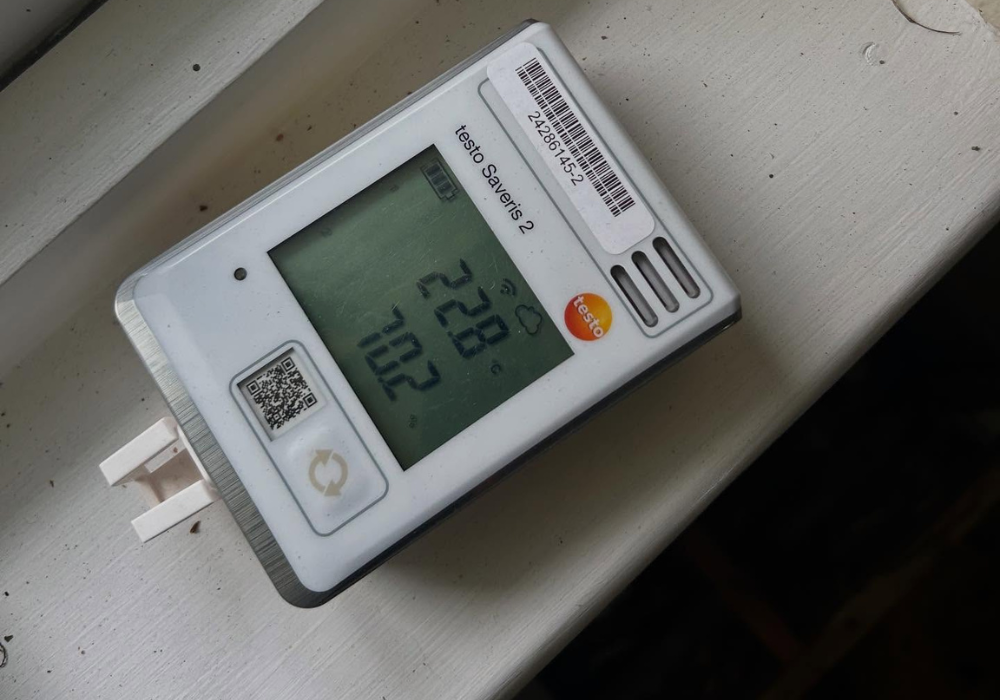
In condensation investigations, surface temperatures are considered alongside room temperature, relative humidity and dew point to understand whether the area is at elevated condensation risk.

6.

Document and recommend

Relevant thermal images, verification readings and conclusions are incorporated into the report, together with recommendations for repairs, monitoring, drying, ventilation or targeted opening-up where required.

Technical information

A thermal camera detects infrared radiation from a surface and converts the measured temperature pattern into an image. It does not look through walls and it does not directly detect water. Moisture can create a temperature anomaly through processes such as evaporative cooling or changes in thermal behaviour, but similar hot or cold patterns can also be produced by insulation, air movement, heating pipes, solar loading and construction differences.

Reliable moisture investigation therefore uses thermal imaging to locate potential problem areas and then verifies those areas with moisture measurements. This is the same identify-and-verify principle promoted by thermal-imaging manufacturers for restoration work: the image narrows the search, while the moisture instrument provides the measurement needed to confirm the finding.

Survey conditions influence what can be seen. A useful temperature difference between indoors and outdoors can make insulation or air-leakage patterns clearer, while direct sunlight, recently switched heating, wind or wet external surfaces can complicate interpretation. The thermographer therefore needs to understand both the camera and the building before drawing conclusions from colour patterns alone.

For damp and mould work, thermal imaging is particularly useful when combined with dew-point analysis. If a thermal image identifies a persistently cold junction, the surface temperature can be compared with the room’s environmental conditions to assess whether the area is more likely to experience condensation and support recurring mould growth.

Typical applications

  • Cold bridging and localised condensation risk
  • Insulation gaps and uneven building-fabric performance
  • Damp and mould investigations requiring targeted moisture checks
  • Post-water-damage assessment and drying follow-up
  • Ceiling and wall staining where the affected area is unclear
  • Housing, school and commercial building diagnostics
  • Evidence gathering before targeted intrusive investigation

Frequently asked questions

Can a thermal camera see damp through a wall?

No. It shows surface-temperature differences. Those differences may indicate an area affected by moisture, but the suspected location should be verified with a moisture meter or other appropriate measurement before it is reported as damp.

Does blue on a thermal image always mean water?

No. Colour palettes are simply a visual representation of relative temperature. A cooler area may be caused by moisture, missing insulation, thermal bridging, air leakage, external conditions or another temperature influence.

Can thermal imaging find condensation problems?

It can identify cold surfaces and thermal bridges that may be more vulnerable to condensation. We compare those surface temperatures with room temperature, relative humidity and dew-point conditions to assess the risk properly.

Do you use thermal imaging on every damp survey?

Not automatically. It is used when it is likely to add useful evidence. Some moisture problems are better answered by direct moisture readings, environmental monitoring, leak detection or targeted intrusive inspection.

Will thermal imaging tell me whether insulation is missing?

It can identify patterns consistent with insulation gaps or thermal bridging under suitable survey conditions, but the building construction and environmental conditions need to be considered. Further inspection may be required to confirm the exact physical defect.

Is this the same as your thermal imaging leak detection service?

The technology is related, but the diagnostic objective is different. This service focuses on damp, condensation and building-environment conditions. Thermal imaging used specifically to trace suspected plumbing or heating leaks sits within our Leak Detection & Building Diagnostics service.

Accreditations, Memberships and Professional Training

01_pqs
02_cqms
ICO_Logo_Blue
OnceForAll_-_Full_colour_RGB-scaled
05_safecontractor
06_ssip_smas_existing_website
07_builders_profile
08_citb
09_bdma_existing_website
10_iicrc_existing_website
11_pmii
Screenshot 2026-10-12 at 20.21.30
13. Dewpoint Tech Logo OCT26
14_trading_standards_checked
15_nasc_existing_website
15_nasc_scalable_alternative
16_cscs
17_bwca_small_icon