24 HOUR EMERGENCY RESPONSE: Call 0800 5999 009 or email info@humidityresponse.uk

Thermal imaging surveys that rapidly identify hidden patterns for targeted investigation

Many building defects are invisible until they create staining, damage or service failure. Thermal imaging gives the technician a fast, non-invasive way to scan walls, floors, ceilings and other surfaces for temperature differences that may reveal the pattern of a hidden problem. Used correctly, it can reduce the search area and guide the next diagnostic test without unnecessary opening-up.

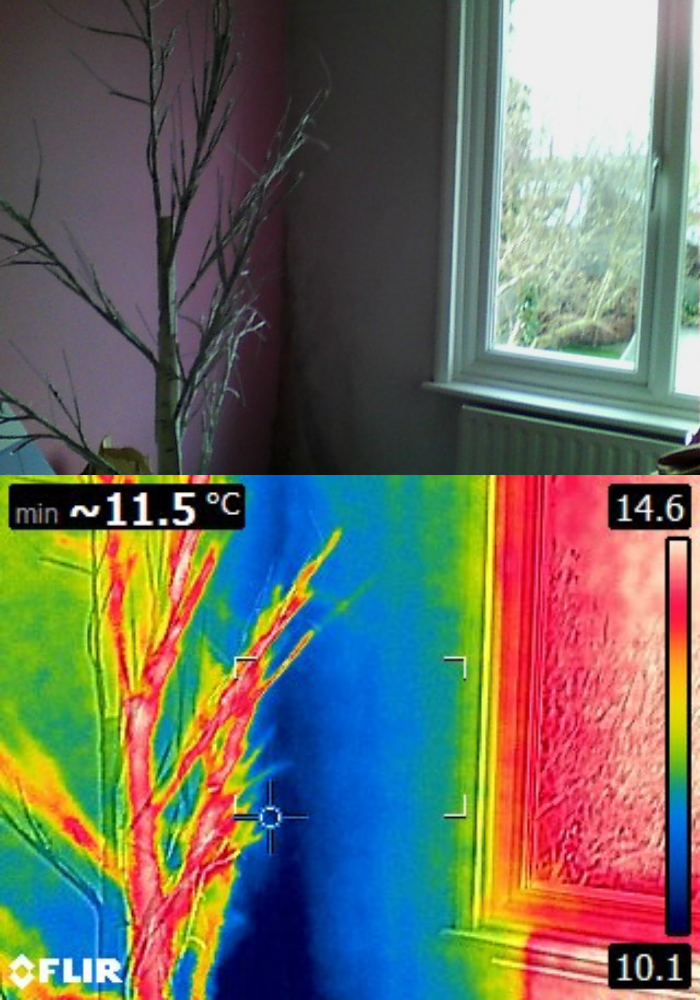
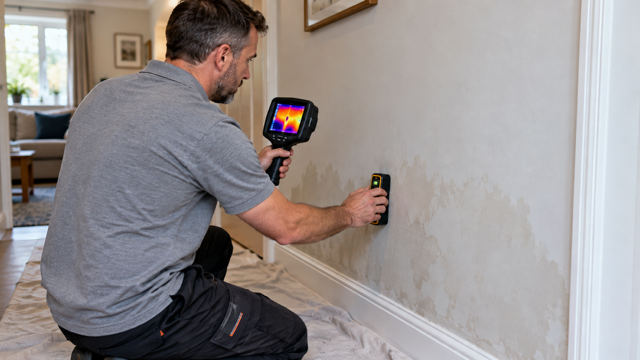
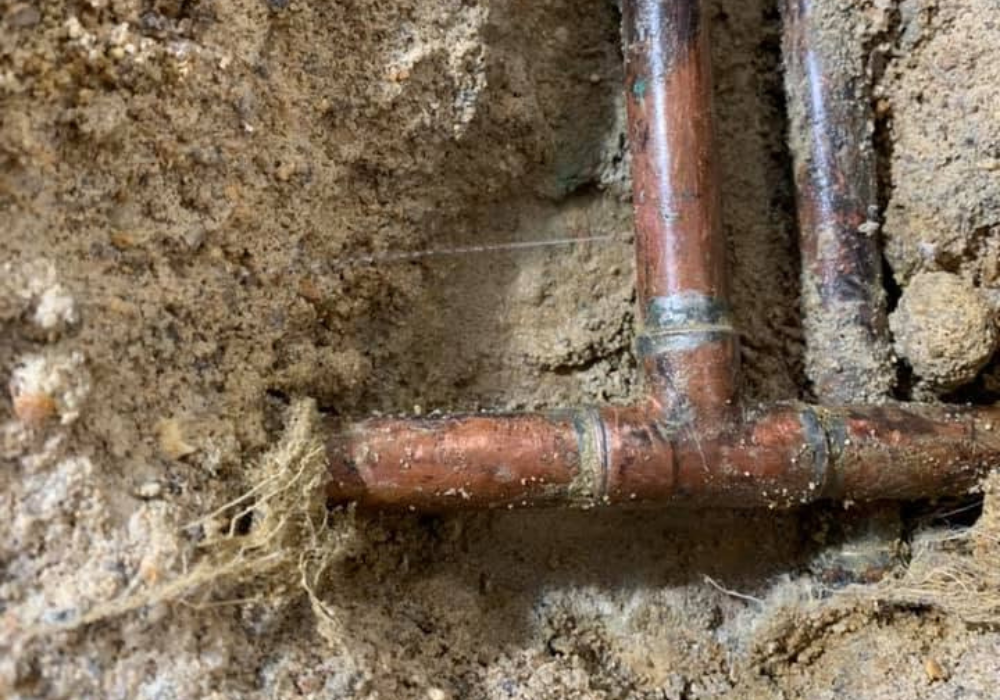
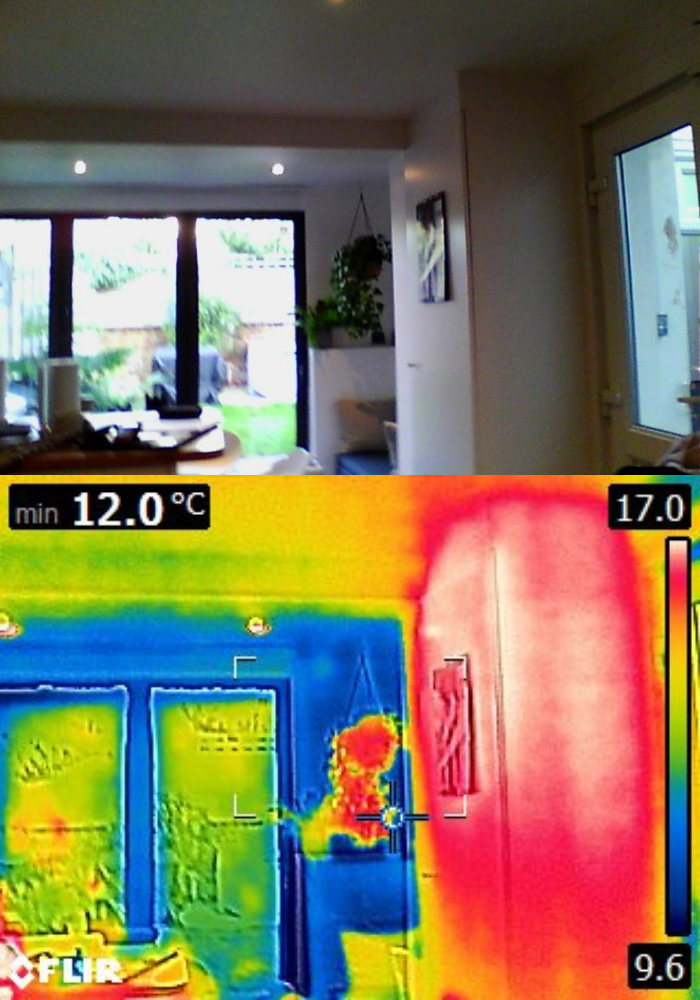
Humidity Response uses professional thermal imaging as part of leak detection, moisture investigation and building diagnostics. The camera creates a thermal image from the infrared energy emitted by a surface, allowing small temperature variations to be compared across a large area. These patterns can help trace hot-water and heating pipes, identify suspected leak-related cooling or heating, highlight areas for moisture verification and reveal building-fabric anomalies. Because temperature difference is not the same thing as moisture, thermal findings are always interpreted in the context of the building and cross-checked where appropriate.

We also provide thermal imaging for damp, condensation and building-environment investigations, learn more here.

Why choose Humidity Response

Circle

Rapid non-invasive scanning

Large surfaces can be assessed quickly before the investigation is narrowed to specific test points.

Circle

Leak-detection integration

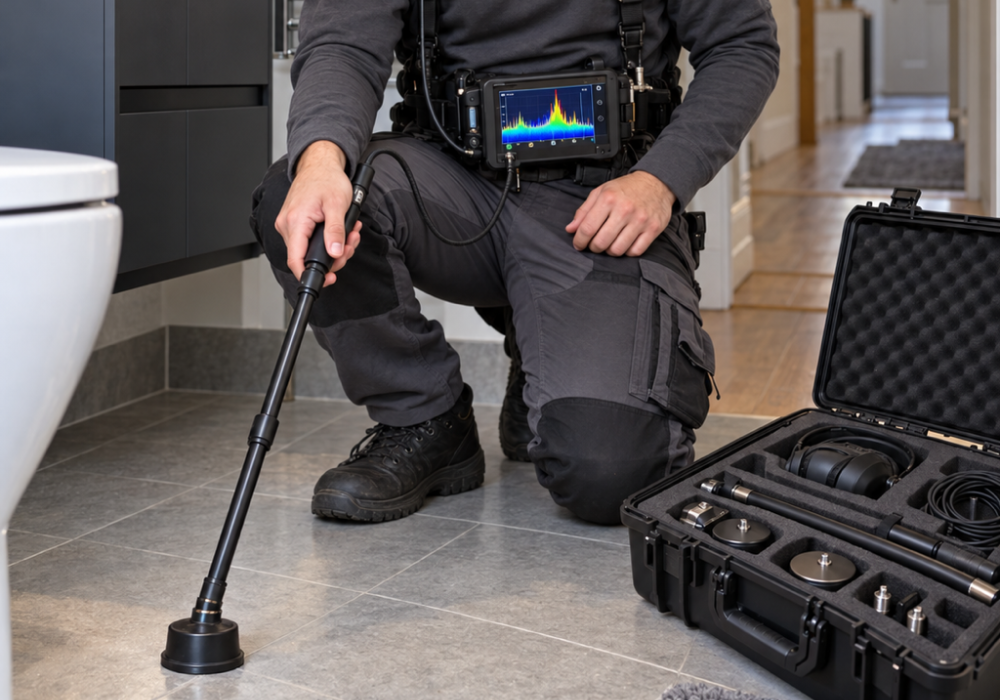
Thermal imaging can be combined with moisture meters, acoustic testing, tracer gas and Trace and Access rather than being offered as a stand-alone photograph.

Circle

Experienced interpretation

We consider heating systems, construction, insulation, air movement, external weather and recent building use before assigning a cause to a thermal pattern.

Circle

Evidence-led verification

Suspected moisture anomalies are checked with suitable moisture measurements or another diagnostic method where possible.

Circle

Useful visual reporting

Thermal images can make complex findings easier to explain to clients, insurers, loss adjusters and property managers.

Circle

Broad building-diagnostic value

The same survey can identify clues relating to leaks, pipe routes, heating distribution, cold bridges, insulation differences and areas requiring targeted investigation.

Our thermal imaging survey process

1.

Define the diagnostic question

We establish whether the survey is looking for a suspected water leak, heating-system loss, pipe route, moisture migration, insulation anomaly or another building-related problem. A thermal camera is most useful when the question is clear.

2.

Review the survey conditions

Indoor and outdoor temperatures, heating status, recent water use, sunlight, wind, wet external surfaces and other factors can influence what the camera displays. These conditions are considered before the images are interpreted.

3.

Scan systematically

Relevant floors, walls, ceilings and service areas are scanned for meaningful temperature differences. Images are compared across the building rather than relying on a single colourful image out of context.

4.

Correlate with the construction and services

Thermal patterns are compared with expected pipe routes, building details, moisture staining, heating layout and the history of the issue. This step helps separate genuine diagnostic clues from normal construction features.

5.

Verify the suspected anomaly

Where moisture is suspected, suitable moisture meters are used to confirm the area. For leak location, thermal imaging may be followed by acoustic or tracer-gas testing if additional proof is required.

6.

Record findings and next action

Relevant thermal images, visual photographs, readings and recommendations are documented. The report explains what the thermal pattern indicates, what has been verified and whether further leak detection, access or repair is recommended.

Technical information

Infrared cameras detect emitted infrared energy and calculate apparent surface temperatures; they do not transmit a signal through a wall and they do not create an X-ray view of the building. The image represents temperature distribution at the visible surface. A hidden hot-water pipe can influence that surface temperature, while water escaping from a pipe may change the thermal pattern through direct heating/cooling or evaporative effects.

This is why thermal imaging is especially useful around central-heating systems, underfloor heating, hot-water pipework and active leaks where a temperature contrast is present. If the escaping water is close to the same temperature as the surrounding structure, or if insulation isolates the thermal effect, the leak may be much less obvious. In those situations acoustic or tracer-gas methods may be more effective.

Moisture-related thermal anomalies need verification. FLIR guidance for restoration professionals follows the same identify-and-verify principle: thermal imaging highlights potential problem areas, while moisture instruments provide the measurement required to confirm them. Humidity Response uses this approach so the report does not describe a cool patch as water simply because it appears different on the image.

Surface properties also affect thermal readings. Shiny metal, glass and other reflective surfaces can reflect thermal energy from the surroundings and can be difficult to interpret. Emissivity, viewing angle, distance, airflow and environmental stability all affect the quality of the survey. The technician therefore records representative images and uses the camera as part of a wider diagnostic process rather than a stand-alone answer.

Typical applications

  • Suspected hot-water and central-heating leaks
  • Underfloor-heating investigations and pipe-route tracing
  • Water staining where the migration path is unclear
  • Supporting moisture mapping after an escape of water
  • Checking ceilings, walls and floors before targeted Trace and Access
  • Cold bridges, insulation anomalies and related building diagnostics
  • Commercial, school and managed-property investigations
  • Evidence gathering for insurance and loss-adjusting instructions

Frequently asked questions

Can a thermal camera see through walls or floors?

No. It measures the temperature pattern at the surface. Hidden pipes, leaks or insulation defects may influence that surface pattern, allowing the technician to infer where further investigation should be focused.

Does a cold area on the image mean there is a leak?

Not necessarily. A cooler area can be caused by moisture, air movement, missing insulation, thermal bridging, external conditions or other factors. We interpret the pattern and verify suspected moisture before drawing a conclusion.

Is thermal imaging useful for underfloor heating leaks?

It can be very useful where the heating circuit creates a clear surface-temperature pattern. It may help trace pipe routes and identify anomalies, but another method such as tracer gas may still be needed if the thermal evidence is inconclusive.

Do you provide the thermal images in the report?

Where reporting is included, relevant thermal images can be presented alongside normal photographs, moisture readings and an explanation of what the image shows and how it was interpreted.

Can thermal imaging replace acoustic or tracer-gas testing?

Sometimes thermal imaging may provide sufficiently strong evidence, but not in every case. We use the method or combination of methods that best suits the system and construction rather than forcing every leak investigation through one technology.

Is this the same as the Thermal Imaging page under Damp & Mould services?

The camera technology is the same, but the purpose is different. This page focuses on leak detection, pipe routes and building diagnostics. The Damp & Mould thermal-imaging service focuses more on cold bridging, insulation, condensation risk and moisture investigation within the indoor environment.

Accreditations, Memberships and Professional Training

01_pqs
02_cqms
ICO_Logo_Blue
OnceForAll_-_Full_colour_RGB-scaled
05_safecontractor
06_ssip_smas_existing_website
07_builders_profile
08_citb
09_bdma_existing_website
10_iicrc_existing_website
11_pmii
Screenshot 2026-10-12 at 20.21.30
13. Dewpoint Tech Logo OCT26
14_trading_standards_checked
15_nasc_existing_website
15_nasc_scalable_alternative
16_cscs
17_bwca_small_icon